A short walk through the Isle of Dogs

If you’re looking for a short walk in London, you can’t go far wrong by walking from Canary Wharf to Greenwich, through the Isle of Dogs. I was looking for somewhere to go with a friend and her mother who was down in London from Scotland, and chose this walk yesterday as we wanted somewhere away from the Bank Holiday crowds and thought that places like the Southbank would be mobbed.

The walk takes about 35 minutes, so we thought we would aim to get to Greenwich for lunch. Meeting up at Canary Wharf tube station, you first have to find your way across the South Dock towards South Quay. I always find Canary Wharf a bit disorienting; there are so many high-rise office blocks, it’s almost like a City in its own right.

DSC01351

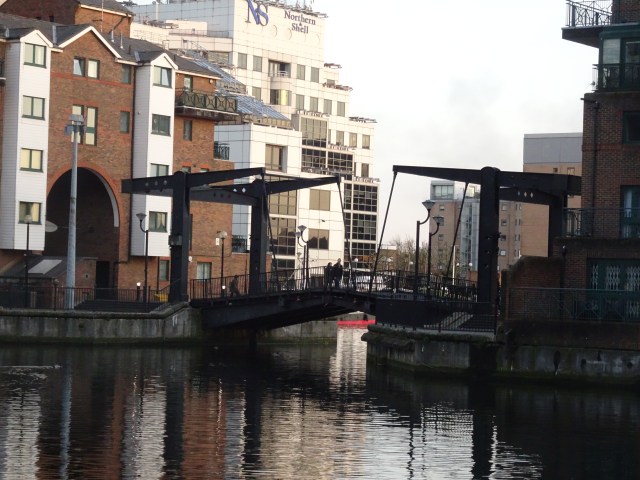
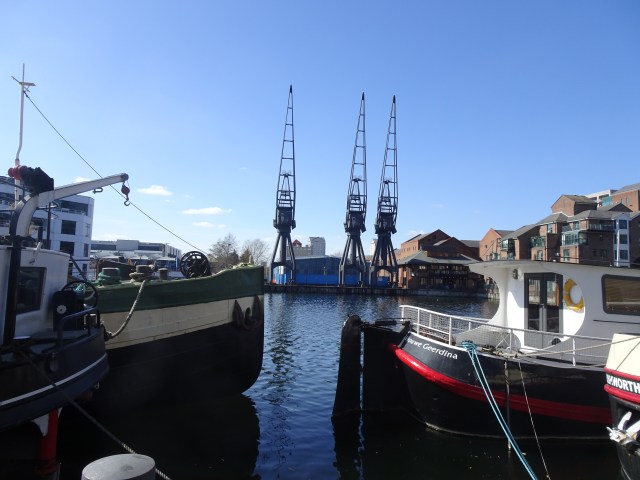
But within minutes of leaving the bustling Canary Wharf you very soon find yourself alone and walking alongside Millwall Dock. The Dock was built in 1865 and is an L-shaped dock divided into the Inner and Outer Dock by the attractive Glengall bridge. Millwall Docks were best known for the grain trade, and housed the first purpose built granary for the Baltic grain market. The unique brick-built granary was 76 metres long, 30.5 metres wide and was designed to hold 24,000 tons of bulk grain. It had 11 floors for storage and inspection and a delivery floor and basement. The granary was divided into five compartments with vertical firewalls and had a 20,000 gallon (91,000 litre) water tank on the roof for fire fighting and windows for ventilation. Three pneumatic grain elevators were erected on platforms 15 metres away from the jetty. These could discharge directly into barges or to the granary.

In its heyday there would have been hundreds of dock workers and granary workers working in the area which would have been as busy and bustling as Canary Wharf now is, but yesterday in the sunshine it seemed a sleepy, pleasant, quiet area – a hidden gem that would easily qualify for the “Secret London” tag. There are a few Dutch barges turned into houseboats, and the majority of buildings lining the dock are being turned into flats that are probably being sold for prices that the original dockworkers could only dream of. The dock has one other claim to fame slightly different to its industrial heritage: it was used as the location for boat stunts in the 1999 James Bond film “The World Is Not Enough”!

DSC01296DSC01337

DSC01348

Glengall Bridge, Millwall Inner Dock

DSC01346DSC01344

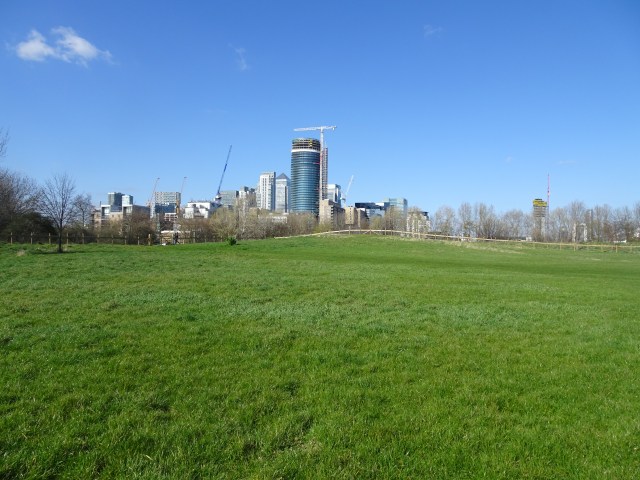
The walk then runs along East Ferry Road towards Mudchute, past another hidden gem of Secret London – Mudchute City Farm. I’ve long been a fan of City Farms and used to visit Hackney City Farm quite regularly. Mudchute is charming; set in 32 acres of green space where you could be forgiven for thinking you were in the countryside, although the tower blocks of Canary Wharf are visible in the immediate distance.
DSC01301

Mudchute City Farm

If you can tear yourself away from the delights of Mudchute City Farm, the walk then goes past the more urban Millwall park and into Island Gardens.

At Island Gardens is the North entrance to the Greenwich foot tunnel, marked by a glazed dome that was damaged by bombs in the Second World War. Before going into the tunnel, there is time to pause and perhaps have a cup of tea from the Gardens café and to admire the view of Greenwich from across the Thames.

DSC01302

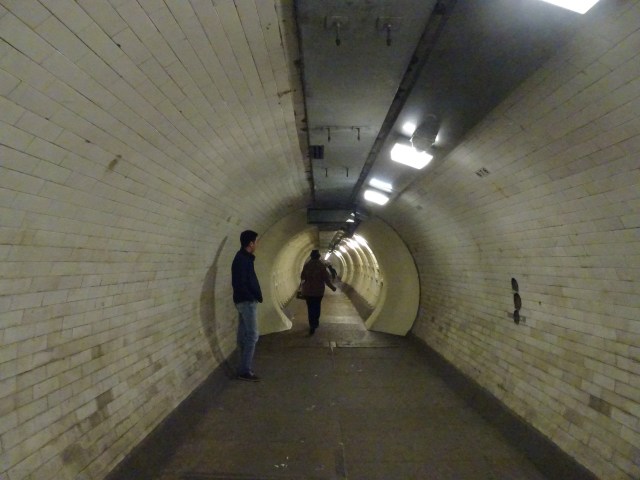
The Greenwich Foot Tunnel is an impressive feet of engineering in its own right. I love the tunnel, and am always amazed by how few of my friends who have lived in London for many years even know of its existence. The project to build the tunnel started in June 1899, with the tunnel opening to the public on 4 August 1902. It replaced an expensive and sometimes unreliable ferry service and was intended to allow workers living on the south side of the Thames to reach their workplaces in the London docks and shipyards then situated in or near the Isle of Dogs.

The tunnel is classed as a public highway and therefore by law is kept open 24 hours a day, and as much as I love it, I think it would be a bit spooky to go down there in the middle of the night. It would make a great location for a ghost story! The tunnels are accessible by spiral staircases and large lifts which are now self-operated; prior to recent renovations they used to be operated by a grumpy lift attendant who would make sure the ‘no cycling’ rule was strictly adhered to. With the demise of the lift operators and despite the signs everywhere stating ‘no cycling’ several cyclists decided to ignore this rule yesterday. Walking through the tunnel I always have a sense of awe that I’m actually walking under the Thames. Funnily enough I don’t have the same sense of awe when driving through the Blackwall Tunnel – maybe it’s something to do with being a much smaller space.

DSC01320

DSC01312

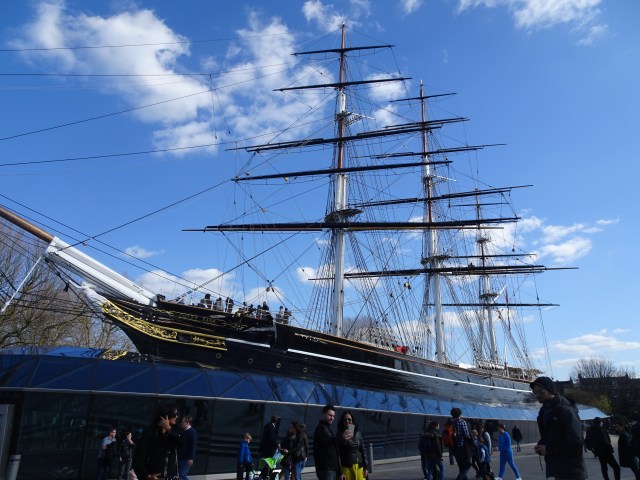
The South side of the tunnel brings you out right by the Cutty Sark and into the heart of Greenwich. As it was Good Friday, and a sunny one at that, the place was thronged with crowds all out enjoying the sunshine. We soon realised the schoolgirl error we had made as we hadn’t made a reservation for lunch and couldn’t get into any café / restaurant as they were all booked out for hours. But we managed to find a seat in the pub in Greenwich market, and eventually managed to get some lunch!
DSC01315

Returning to Canary Wharf at sunset provided a beautiful red sky with the city as a backdrop.

DSC01335DSC01369

So, if you’re looking for a short walk that takes you back through time, with some fascinating industrial architecture and a City Farm thrown in, you can’t do much better than the Isle of Dogs. Just remember to book a restaurant for lunch in Greenwich if going on a Bank Holiday!

Map


Posted in London, Photography, Uncategorized, Walking | Tagged | Leave a comment

Masterchef bingo

The latest series of Masterchef started last night, with the usual line-up of contestants chomping at the bit to reach the finals, with the dream of chucking in their day-jobs to open a resturant, write a cookery book and take part in numerous cookery fairs or pop-up supper clubs. I have enjoyed watching Masterchef for many years, and wrote a post in December about the last “Professionals” series which you can find in the archive section. But are you, like me, feeling that the format is getting a tad clichéd and needs some spicing up? More bang bang chicken than plain roast chicken? Do you find yourself nodding off when faced with Gregg’s pudding face yet again? Well never fear, I have just the answer for you: Masterchef bingo. From now on, Masterchef episodes can be turned into a fun game that will keep you on your toes and riveted to the telly! First you need to download your handy, free bingo card here:

Masterchef bingo card

Then decide how you are going to play; there are no hard and fast rules. If playing alone, you may simply decide to use one card per episode and just see how many boxes you can cross off and therefore which episodes contain the most clichés. If there are more than one of you playing, you may decide to nominate a line either across or down to each person, and the one who gets the most crossed off wins. Or just see who can be the first to shout out “bingo” on getting a full line or “house” for the whole card. Or turn it into a drinking game and take a slug of whisky or your desired beverage every time a word on the card comes up on the programme.

Some of the items on the card are self-explanatory; if you have “beetroot” for example, you can cross it off the first time a contestant uses beetroot as an ingredient; similarly whenever a contestant announces “Enjoy!” as an instruction/order you can take a drink if playing the drinking game. On second thoughts, maybe just the first time as they seem to shout “Enjoy” all the time and I don’t want to be held responsible for your inebriation. Not all the items are words that need to be said by the contestants, however. “Blobs” refers to the fashion for decorating a plate with blobs of sauce from a squeezy container that looks like it should contain paint at a nursery or ketchup in a greasy spoon. “Puddle/smear” can be crossed off whenever a contestant puts a spoon-shaped puddle of ingredient on a plate and then drags the spoon across it to give the puddle a tadpole tail, as a base for ‘plating’ the other ingredients on top. And “paint-brushed plate” does what it says on the tin and can be crossed off when the contestant starts to ‘plate’ the dish by painting a thick line of sauce across the plate.

From memory, fifteen of the items could have been obtained in last night’s episode, which got the series off to a cracking start with the introduction of Indian Sushi from contestant Chris, which didn’t have a single item on the bingo card – oh, except perhaps the ubiquitous ‘enjoy’ command. Still, we can’t have clichés with every contestant, can we?

Enjoy.

Posted in television, Uncategorized | Tagged , , | 1 Comment

Sri Lankan wildlife

Mention the word “safari” and I’m instantly transported to the wilds of Africa, and to game reserves containing lions, tigers and giraffes. So I was surprised to recently find myself on safari, not in Africa, but in Sri Lanka. I had gone to Sri Lanka for a week’s yoga holiday and preceded the yoga with a week’s tour travelling around the country visitng the cultural sights rather than having gone to the country to see wildlife. However a couple of days of the ‘cultural’ bit of the holiday I found myself on a safari in an open topped jeep, binoculars to hand, eagerly scanning a wildlife park for signs of leopards.

The wildlife park was called Wilpattu National Park, on the North West coast of the island. Although Wilpattu is the largest national park in Sri Lanka, it is also a lot quieter than the other national parks. My guidebook told me that before the Civil War, it was one of the most popular parks but was shut down in 1985 following an attack on the wardens by the LTTE (Tamil Tigers). It reopened briefly but then shut again until 2010.

I started to get very excited when I read that the star attraction of the park are the leopards and also the sloth bear. But then I also read that wildlife in the park suffered greatly at the hands of poachers during the Civil War and is still recovering, and the vast expanse and thick undergrowth keep animal sightings few and far between, although it is great for birds, so I went into the park with little expectation of seeing anything. And with low expectations, I was pleasantly surprised at how much we did see, even though the sloth and leopards, sadly, remained elusive.

However, the one animal I didn’t see in Wilpattu that I was expecting to see was the elephant as deforestation due to a rise in population in recent years has dwindled elephant numbers considerably. The British are not covered in glory either with regard to elephant conservation in the past. During the reign of the Sinhalese kings, no elephant could be captured, killed or maimed without the King’s permission. But when the British came to power, this protection was withdrawn. The British saw elephants as agricultural pests and paid a bounty for each elephant killed, leading to the slaughter of thousands of elephants in the 19th century. But the next day I went to another park, the “Elephant Ecopark” where our guide said that we were “guaranteed” to see elephants. And although the trip into the park got off to a bad start as our jeep broke down, this turned out to be fortuitous as we lost the line of tourist jeeps all jostling to be at the front to see the elephants and found ourselves on our own in the park. Not long into the park I saw my first wild elephants, followed by lots more just eating the vegetation and walking out right in front of the jeep, including a two-week baby elephant. At one point everyone was watching the elephants to the left of the jeep and I just turned around and saw the most beautiful sunset on the other side of the jeep which I nearly missed!

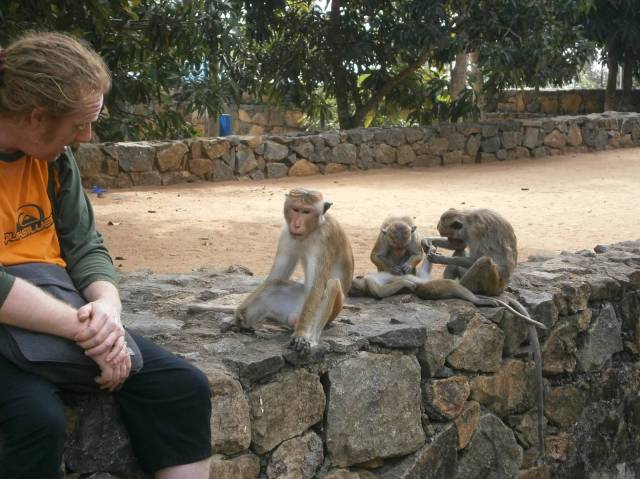
But it wasn’t just in wildlife parks that I saw amazing wildlife – the country is teeming with it! There are monkeys everywhere, some of them incredibly daring and we had warnings of monkeys stealing mobile phones or sunglasses. In one park I saw thousands of fruit bats, and even in town centres like Galle there were kingfishers, other birds and the ubiquitous monkeys. And on the South coast you can go whale watching, where I saw a pod of dolphins and two huge blue whales that were like elephants of the sea. So although I didn’t go to Sri Lanka specifically to see the wildlife, I was amazed by the variety of the Sri Lankan wildlife and it would be enough to make any wildlife enthusiast very happy indeed.

P2100897 monkeys

Posted in Travel, Uncategorized, Wildlife | Tagged , , , , , | Leave a comment

Do you judge a book by its cover?

rivers of london

Recently I was made to ponder this question, and found that in my case the answer is clearly “yes”! But let me backtrack a bit. How do you choose what book to read? I’m sure that 99% of people do what I usually do, which is to either read a book that has been recommended by a friend or in a book review, or is by an author that I know and like, or simply by picking up the book attracted by its cover and then by reading the blurb on the back of the book. It’s a bit harder to do this with electronic book readers like a kindle, but the latest versions show the book cover in picture format and have the blurb on the back there too. And book covers tend to be very type-specific too; chic-lit books often have a cutesy cartoon image of a sassy young woman and curly writing in pink or purple, whereas books like Andy McNab’s SAS books often have embossed covers and a strong picture of a soldier or weapons on the front, etc. You can immediately see what type of book it is and make an instant judgement on whether you will enjoy it or not.

For the last couple of years I have sporadically attended a book club at my local Waterstone’s shop – sporadically because I work shifts and so often am not available on book club night. But I also have to admit that if I really don’t fancy the chosen book I will sometimes give that month a miss. Life is too short to waste reading something that you don’t enjoy, right? And I’m not very good at number 4 on this advice on how to read more (if you aren’t enjoying a book stop reading it immediately) so often will prefer simply not to start it if I think I’m not going to enjoy it.

Because I miss book club so often, I usually find out which book has been chosen for the month by email. And the book chosen for March was Rivers of London by Ben Aaronovitch. I had not heard of this book, or the author, but had a dim recollection at the back of my mind that someone had written a non-fiction book about London’s underground rivers, and thought that this was the book. The cover showed a map with the distinctive Thames and the words “In the heart of the capital a different world hides”, which only seemed to support my theory that this was a book about subterranean rivers! I was due to go on holiday and was in the process of loading my kindle with holiday reading material so thought I would add this to my list. And then found that it was in the fiction not non-fiction section. But I just downloaded it to my kindle without reading about what the book was about.

And in the heat of Sri Lanka on holiday I started to read it. The first page got right into the story with a murder that had been committed in Covent Garden and took the viewpoint of the young probationer constable who had been given the unenviable task of spending hours manning the police cordon whilst the murder investigation team detectives set about investigating the murder. So, a crime novel then. I enjoy a good crime drama and so settled into my hammock to read on. But then a little way into the novel things got a bit weird. There was a witness to the murder who was a ghost, and a wizard appeared. At this point I started to get annoyed and angry as I realised the book was a sort of Harry Potter / Buffy the Vampire Slayer type of fantasy book. Now fantasy is not a genre that I have any interest in reading, and I would never knowingly buy and read a book in this genre, so I felt a bit duped. But as I had bought it and started it I thought I might as well read on and struggle through it so that I could go to book club and talk about it. And then as I read on, much to my surprise I found myself hooked, and eagerly wanting to carry on with the next chapter.

It’s an easy read, which is just what you want on holiday. There are some really annoying bits of it, but it is quite funny and entertaining and quite fast-paced. And in the end I actually enjoyed it which was a complete surprise to me, so much so that I’m now considering buying the next book in the series. Looking back at the cover I realise that if I had looked closely at the little diagrams lining the river, I might have picked up a few clues about the contents. But certainly, if I had done so, or had read the blurb and realised what it was about, I would never have read it and that would be a shame – I think I would have missed out.

So, do you judge a book by it’s cover? Well yes, but that’s not always a good thing as then our natural prejudices come into play and we may well miss out on something enjoyable. I’ve certainly decided I need to try to have a more open mind when deciding what to read in he future which can only be a good thing.


Posted in Books, Uncategorized | Tagged , , , | Leave a comment

Lumiere London – let there be light!

lumiere21

January. Dark, gloomy, long cold nights. Christmas and New Year seem a long time ago, and the summer holidays stretch far away in the future. The media is full of articles on how to beat the January Blues, or how to deal with Seasonal Affective Disorder, and for those doing Dry January there is not even the enjoyment of a nice glass of red wine or a pint in front of the fire in a cosy pub.

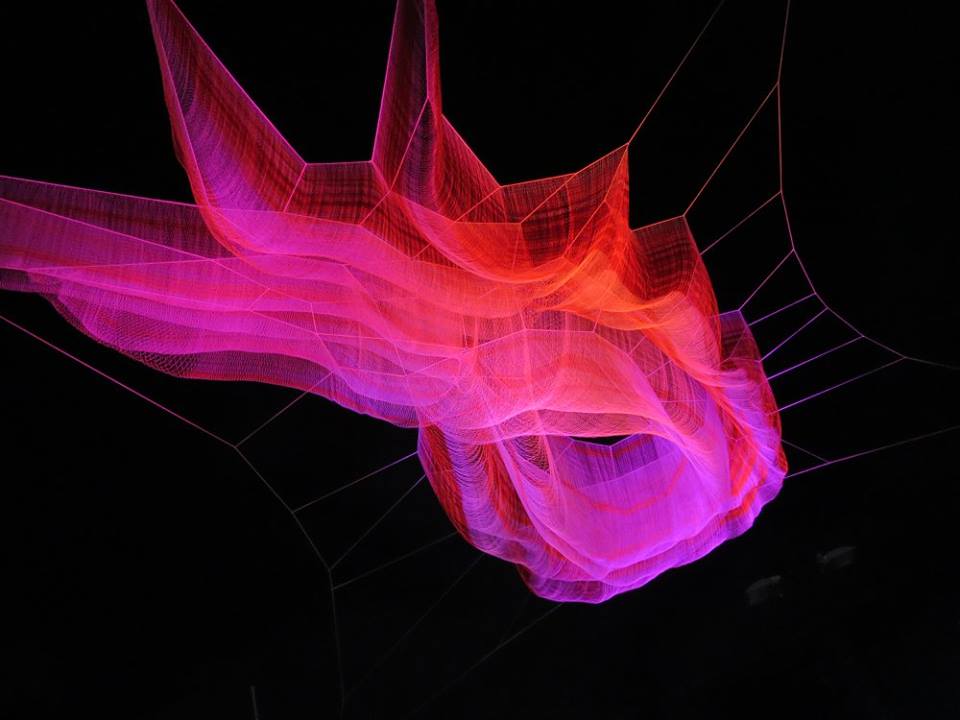
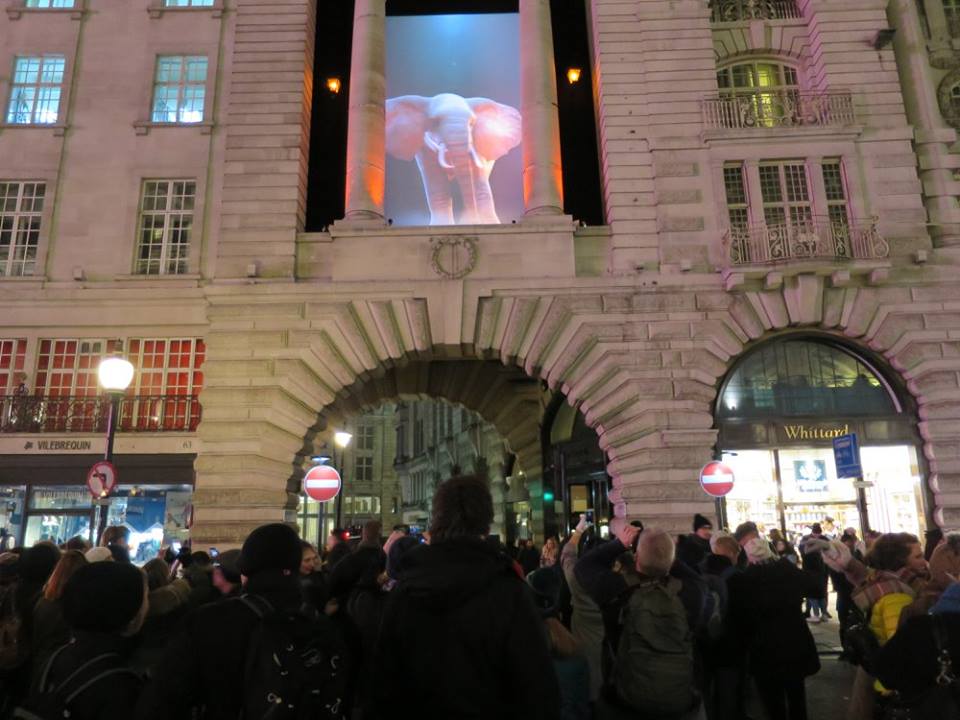
And yet for Londoners there was light at the end of the tunnel – quite literally. For four glorious nights the capital city was bathed in light for the inaugural festival of light – Lumiere London. Brought to the city by Artichoke – the company who had previously paraded a giant clockwork elephant through the streets of London – Lumiere brought fantastic light installations to various parts of the city for all to marvel at.

This free event had previously been put on by Artichoke in Durham, and there have been other ‘light’ festivals such as Light Night Leeds, but this was the first time that London had been turned into a giant canvas for art installations.

Unlike a number of other events, Lumiere didn’t receive a lot of pre-event hype or marketing, and the event crept up on us seemingly from nowhere. When I first heard about it I was intrigued, but wasn’t entirely sure it would work in such a large city. For a start there were various logistical problems to overcome, such as stopping the traffic in Oxford and Regent Streets and the chaos this might cause. The city is also too big to walk around and see all the exhibits, so for those wanting to see everything in one night they had to use the tube and other means of public transport, which led to warnings being put out through the media that the tube would be unusually busy and for people to leave more time to complete journeys. And although it crept up on us, once it was here the buzz surrounding it was incredible, with articles in the papers and people’s social media accounts being filled with brilliant photos of intriguing luminous objects. In fact, it became so popular and successful that on the Saturday night, day three of the festival, so many people crowded into the centre of the city it became dangerously overcrowded and the festival organisers had to switch off the lights in order to disperse the crowds.

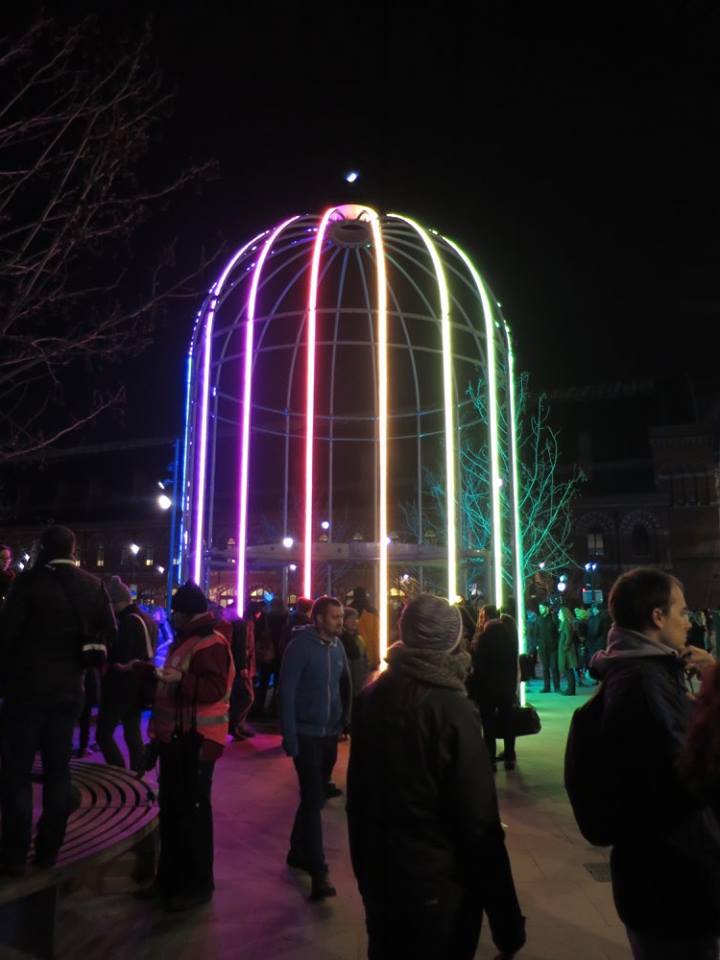
There were four main areas where the installations were centered: Kings Cross, Oxford Circus, Mayfair and Leicester Square. I could only make it to one of these areas, Kings Cross, so the other photos on his post are by my friend Susan Deer, who made it to the other sites and is also much better with a camera than me!

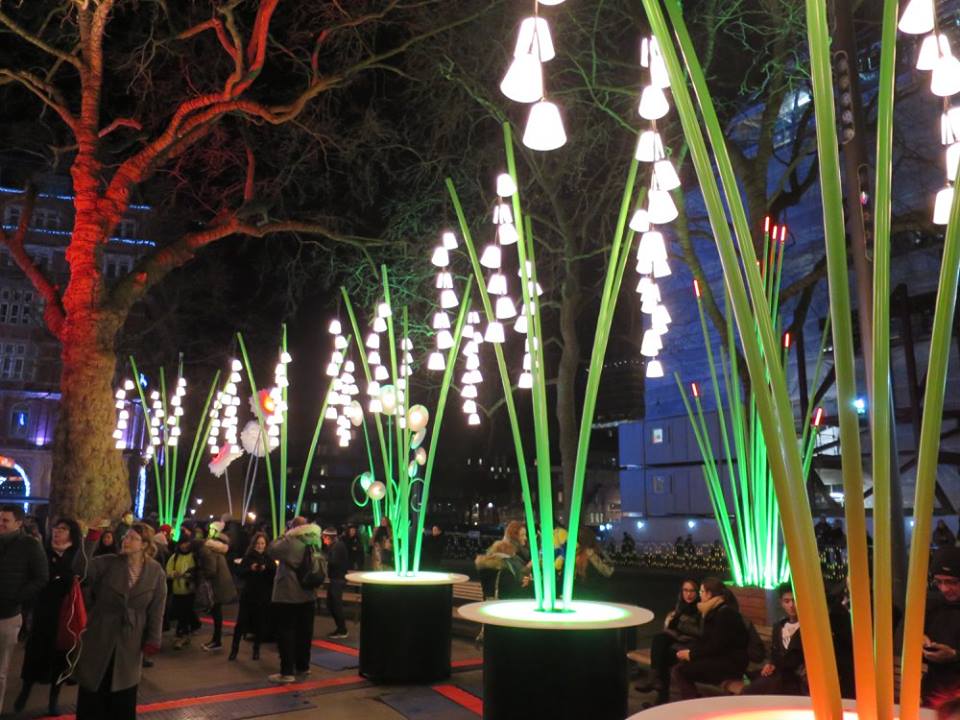
Each area had a different character. Leicester Square was turned into a magical garden of light, with giant snowdrops, huge rushes and grasses and brilliant flowers looking just like the tissue paper ones I used to make as a child.

lumiere7  lumiere8 lumiere6 lumiere5 lumiere4

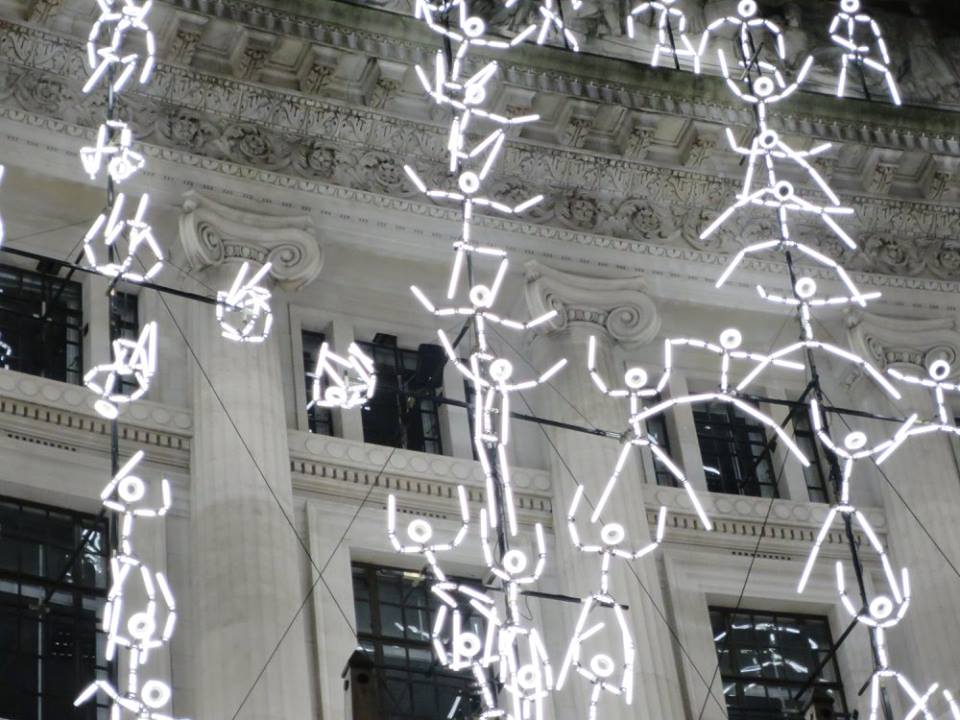
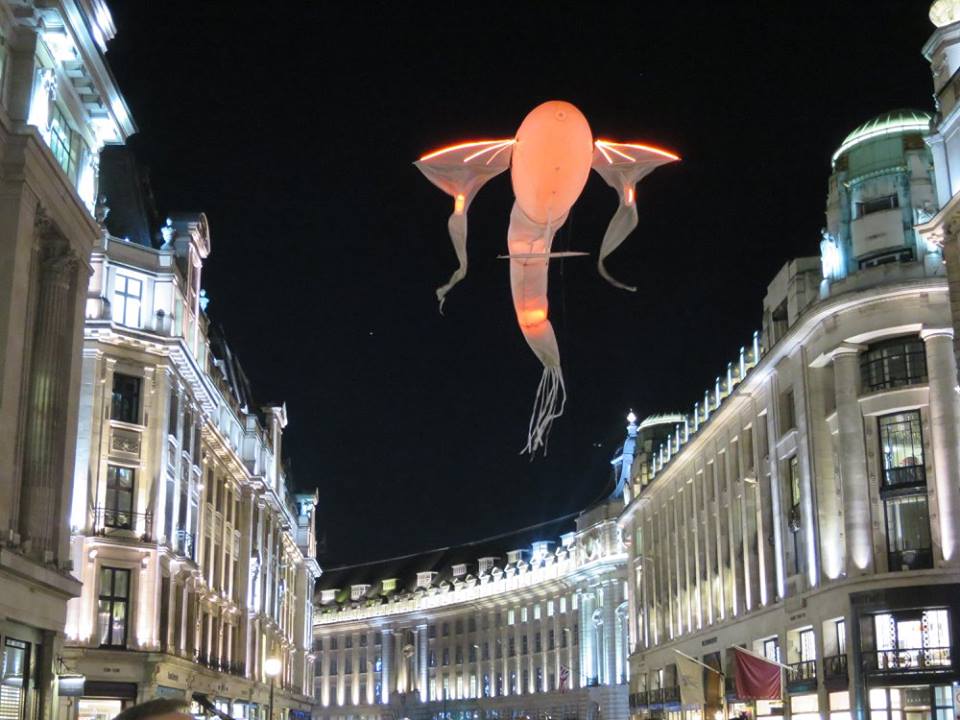
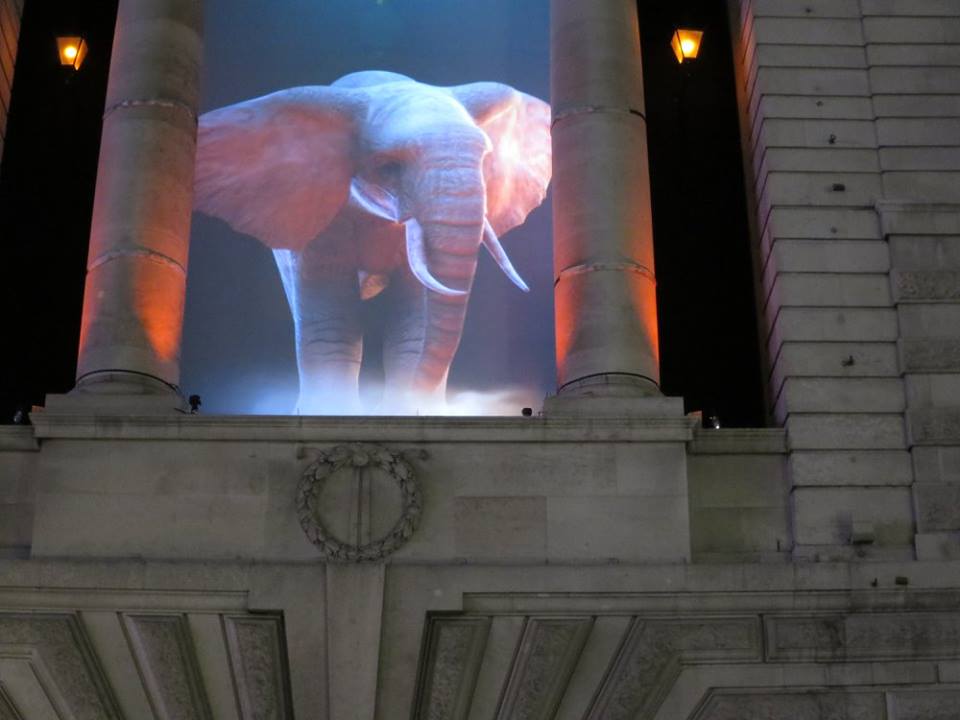
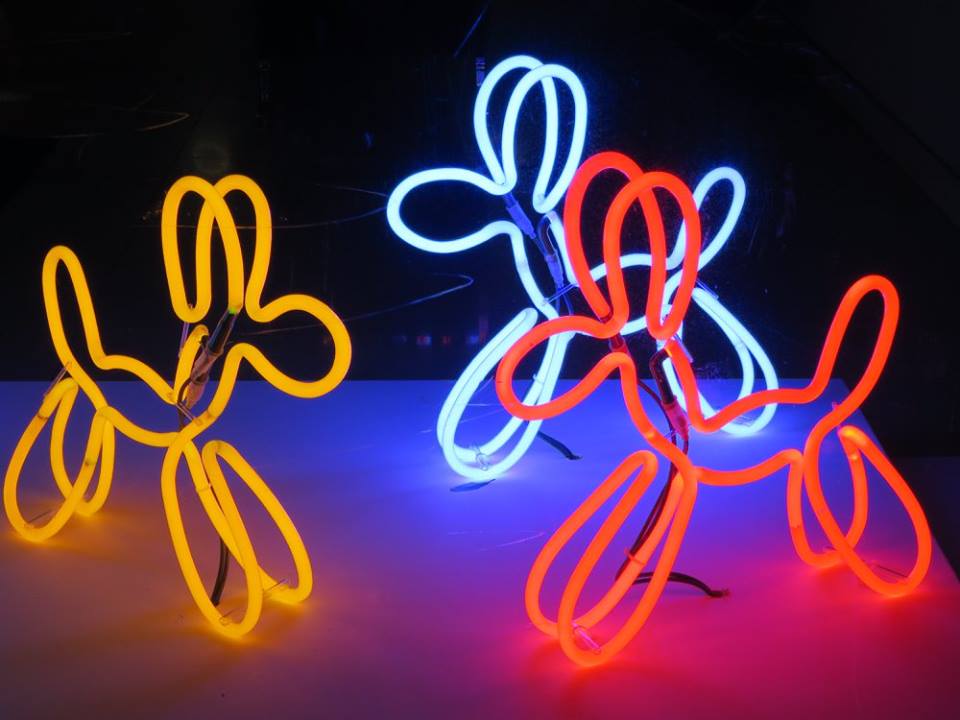
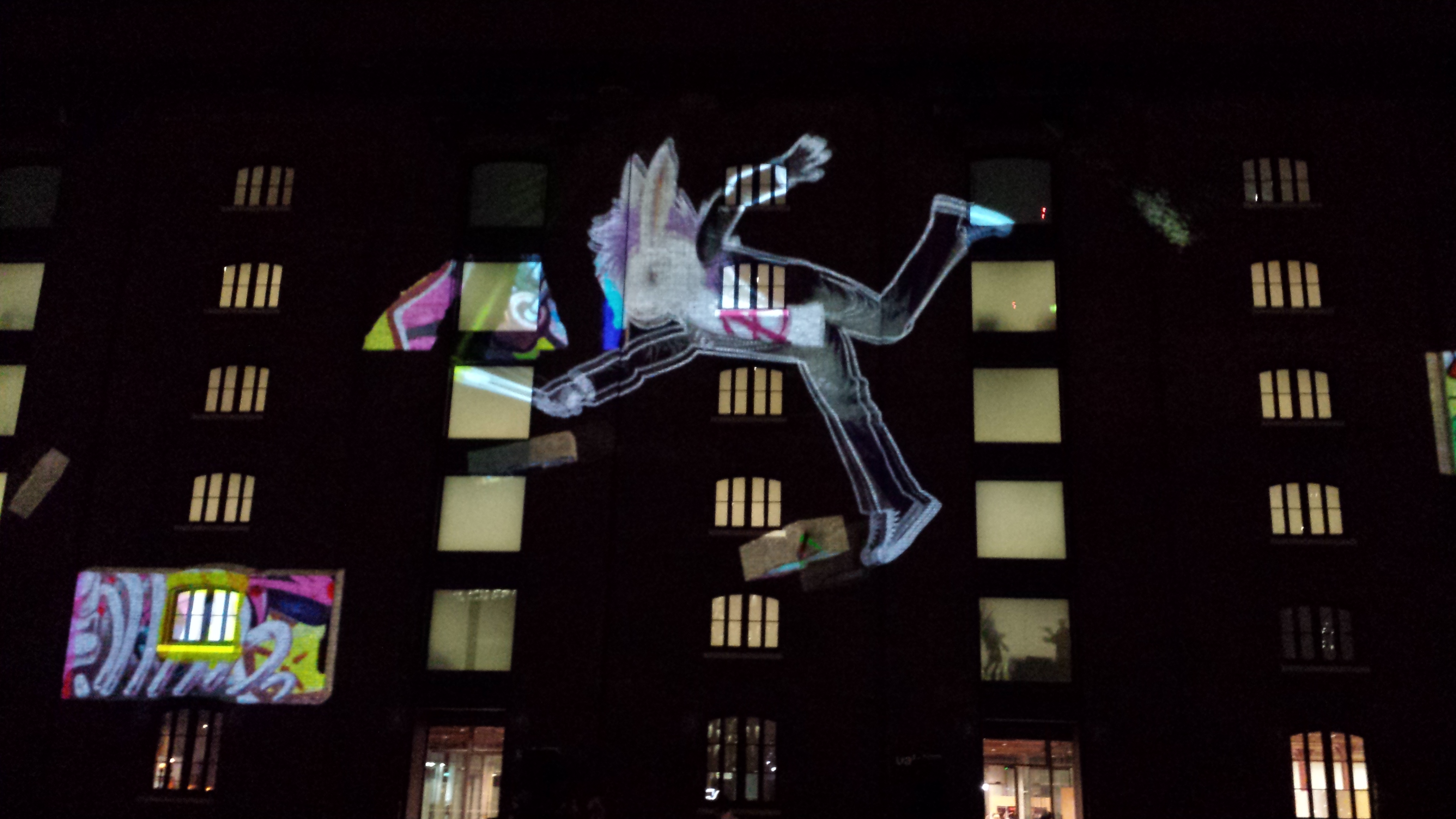
Oxford Street, Regent Street and the surrounding roads saw a circus of fantastical creatures: enormous tadpoles floating high in the air above the street, a giant elephant waddling along, balloon-type dogs and stick-men acrobats tumbling down a building.

lumiere21 lumiere20 lumiere19 lumiere18 lumiere17 lumiere16 lumiere15 lumiere14 lumiere11 lumiere10 lumiere9 lumiere12 lumiere2 lumiere1

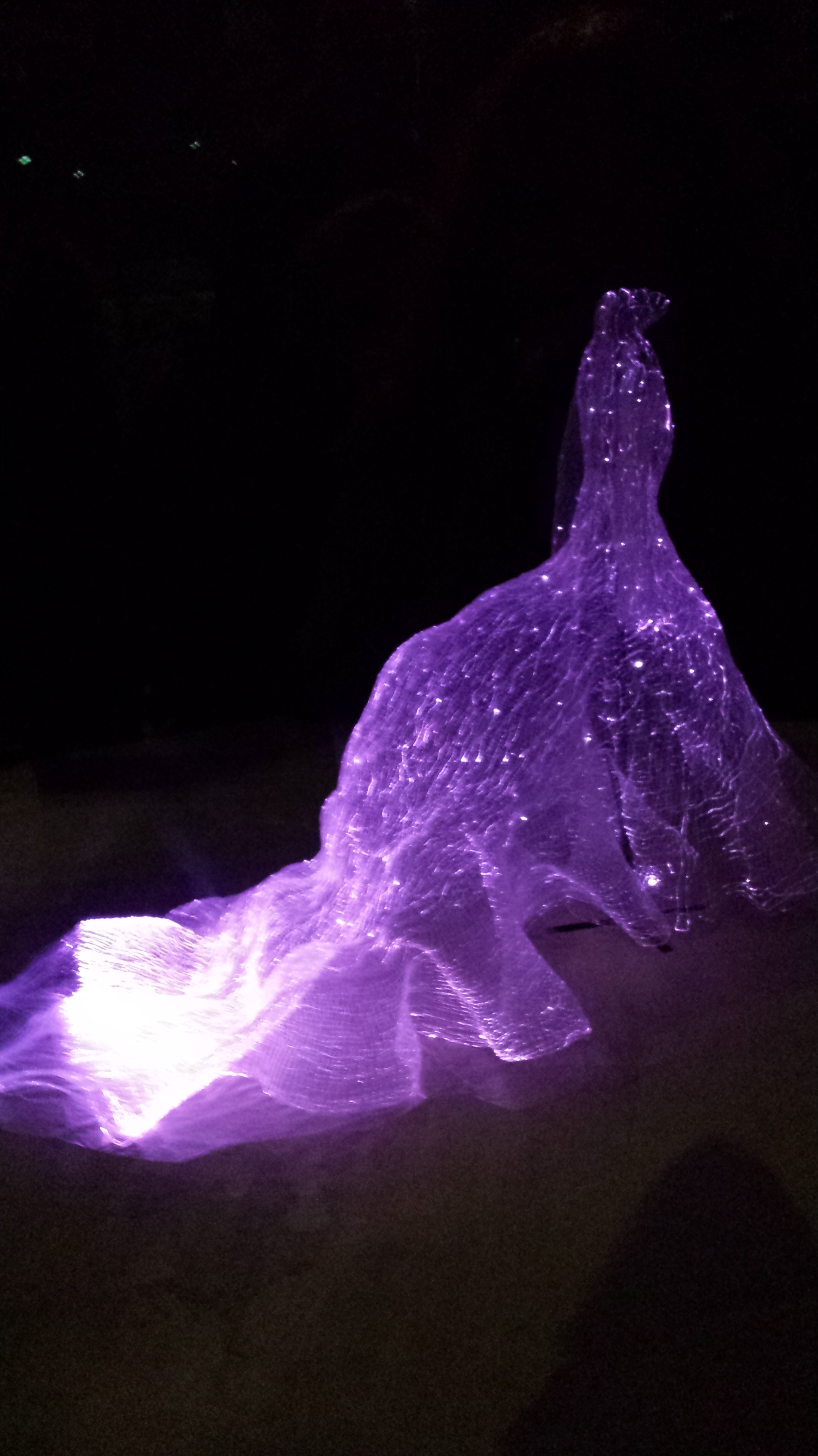
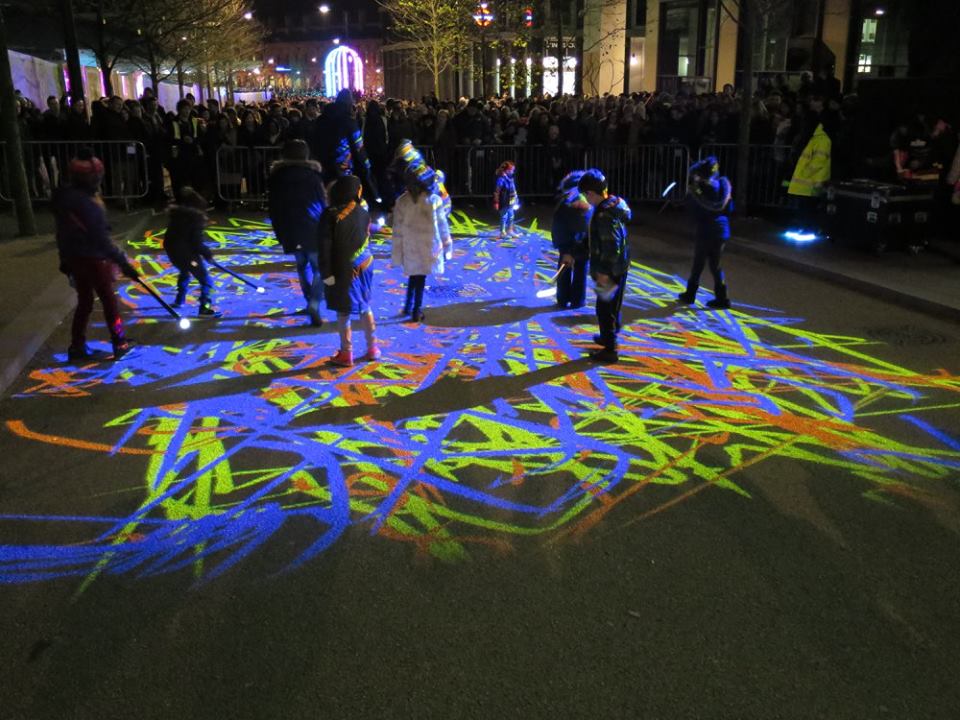
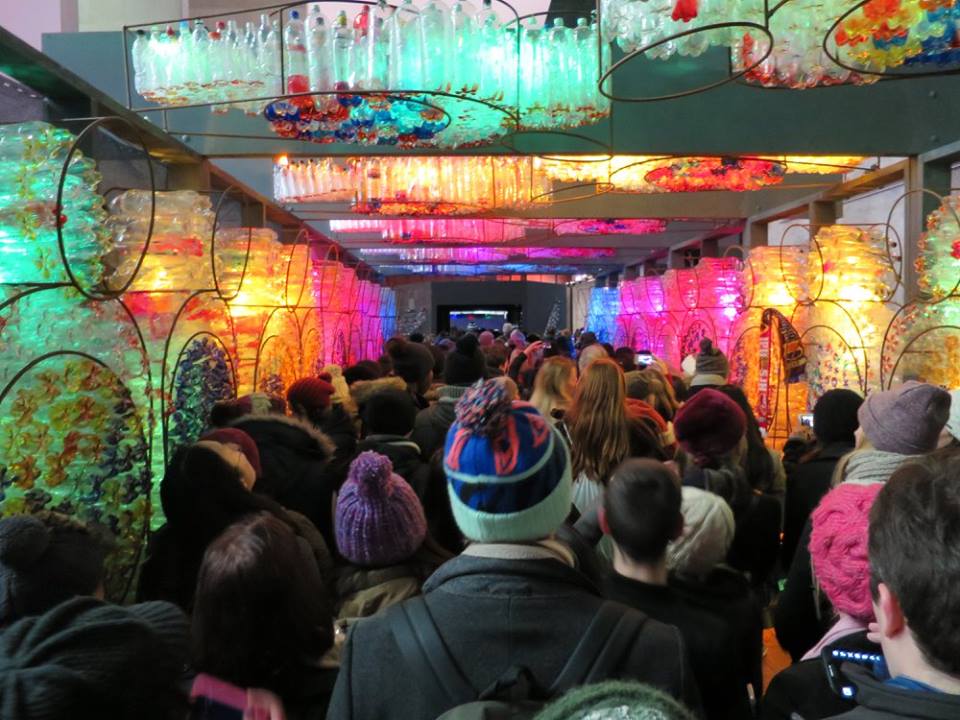
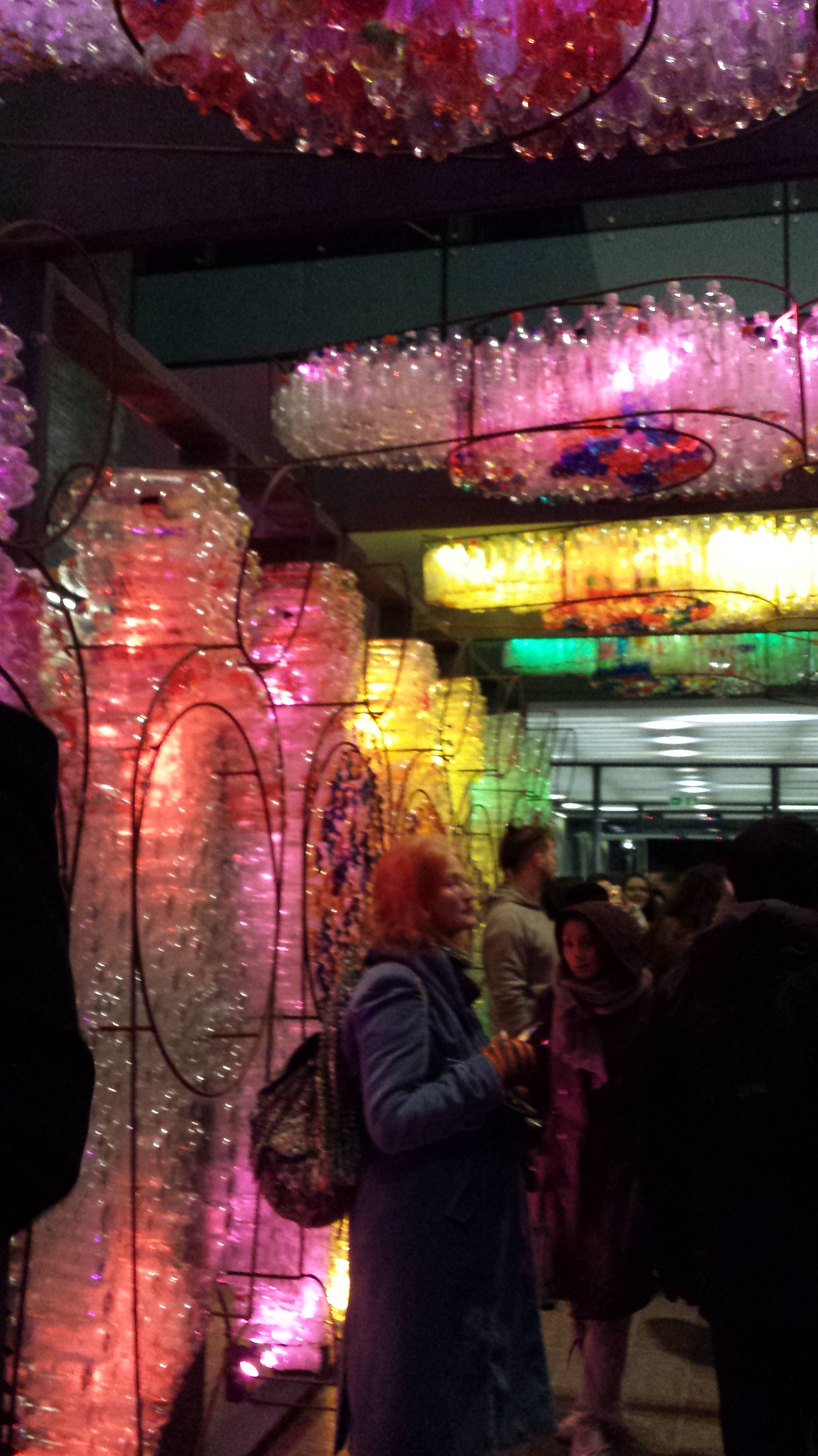
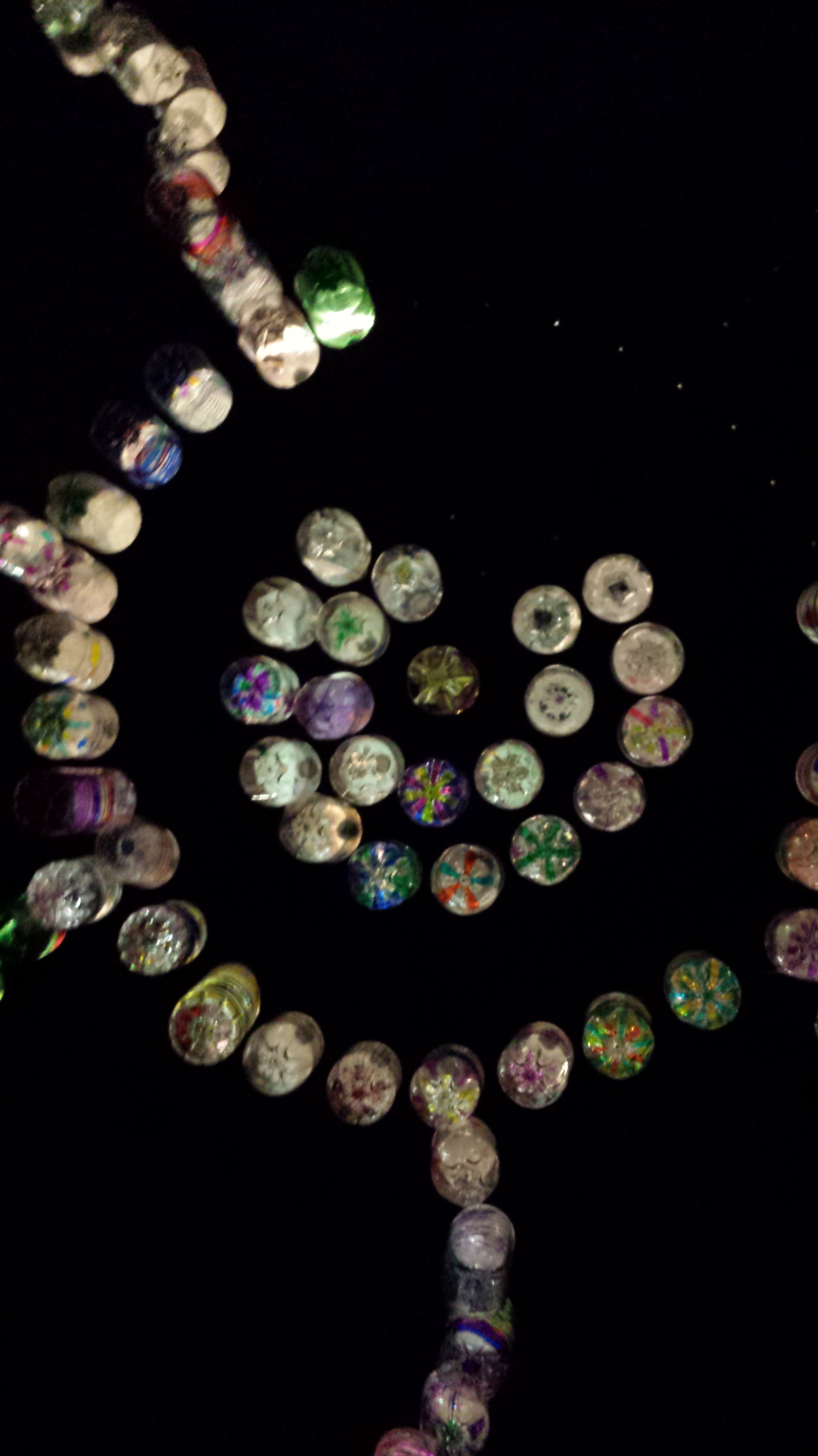
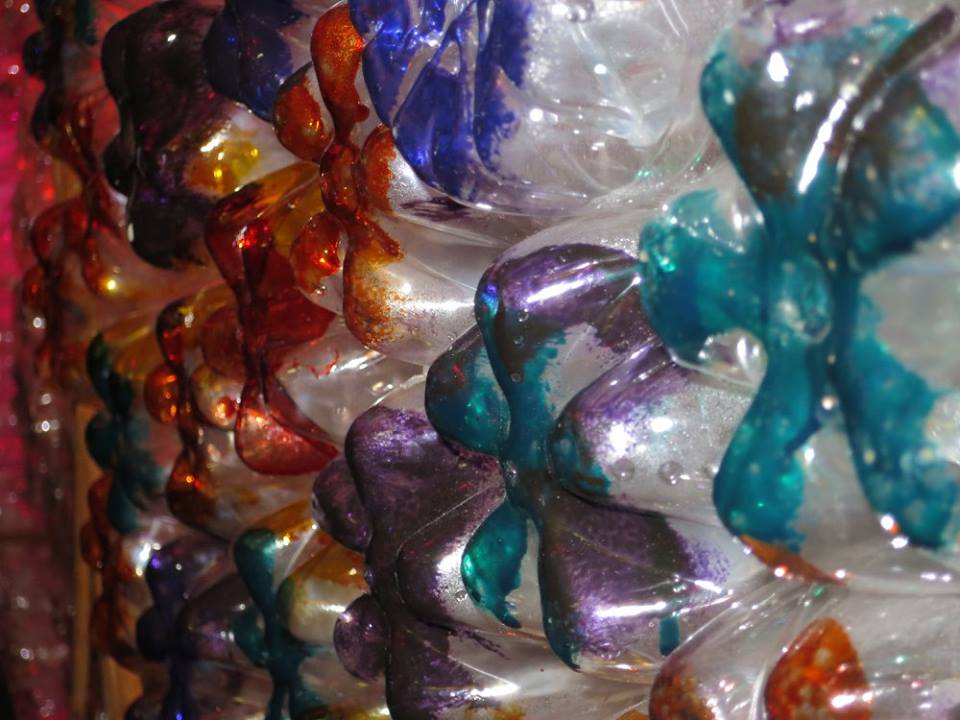
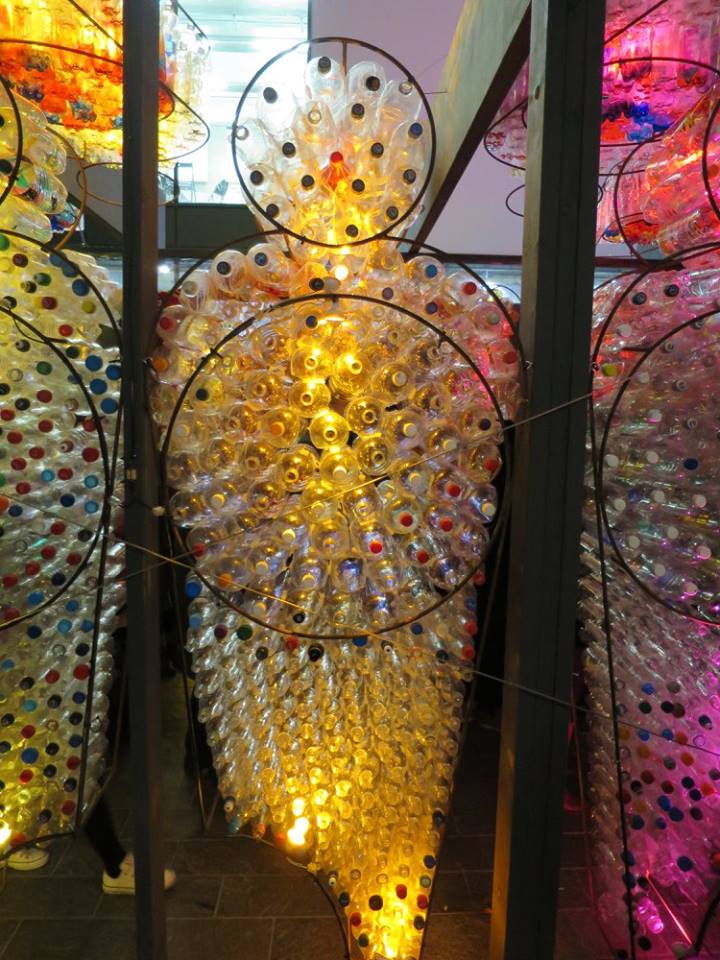
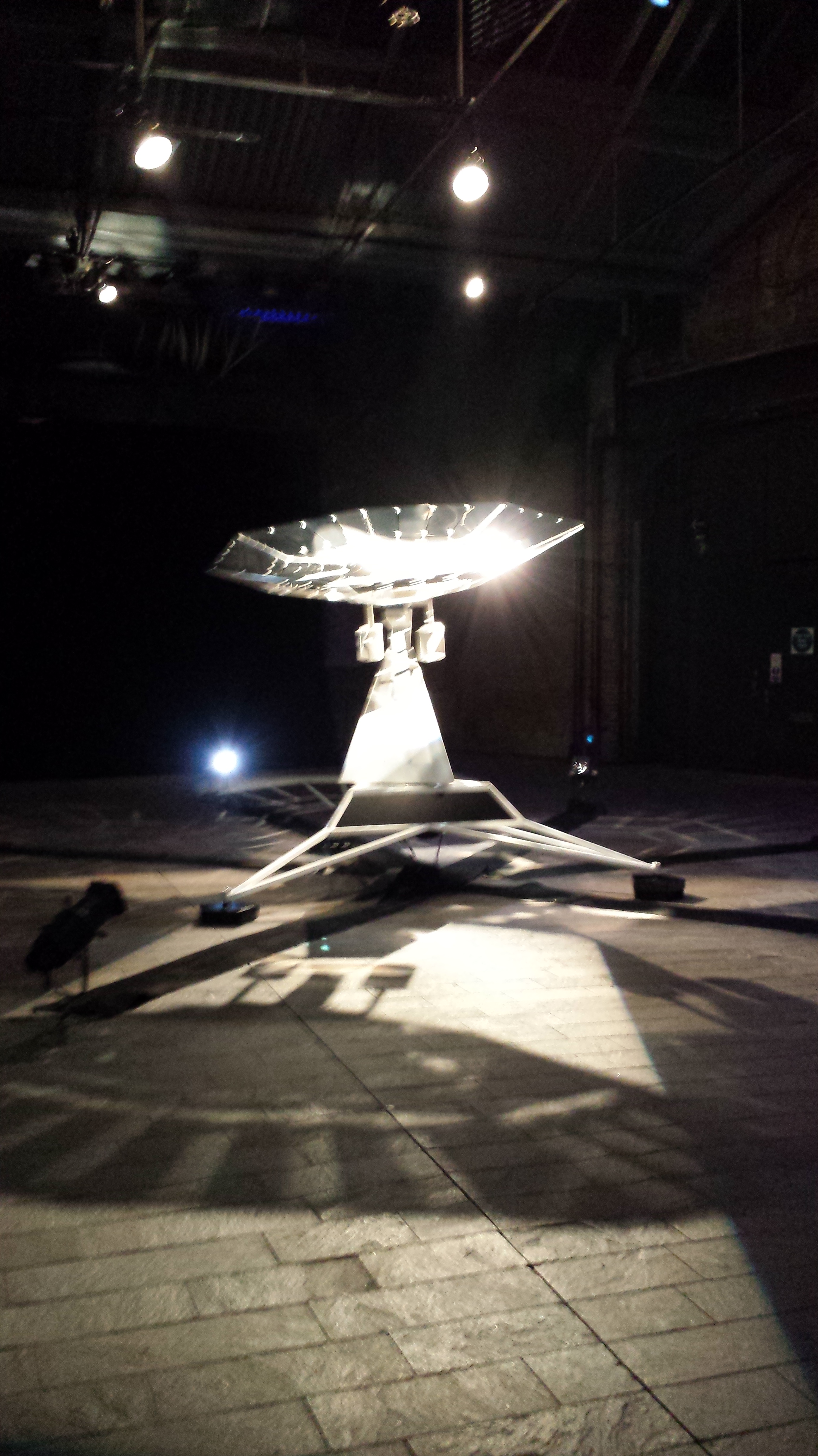
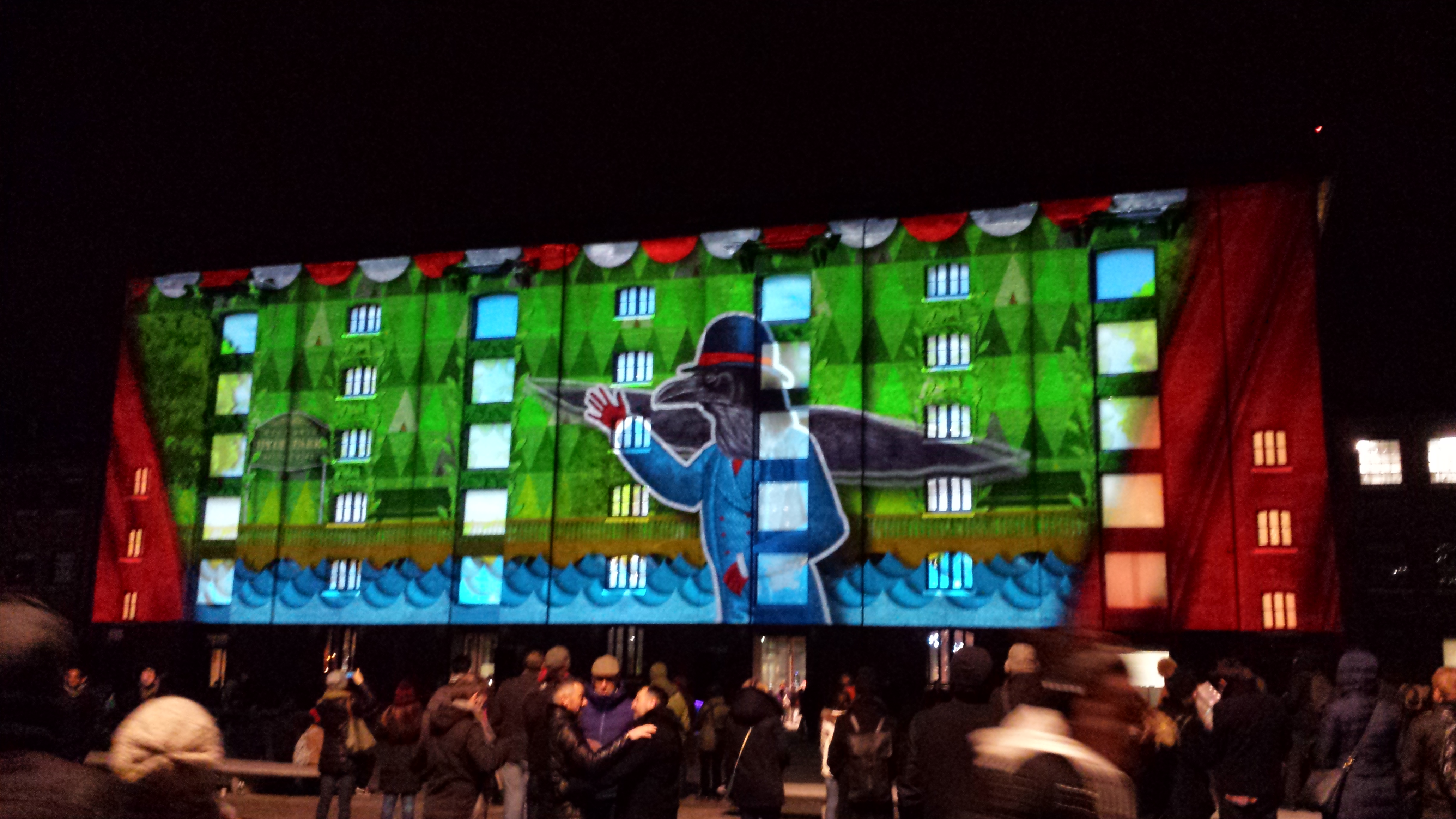
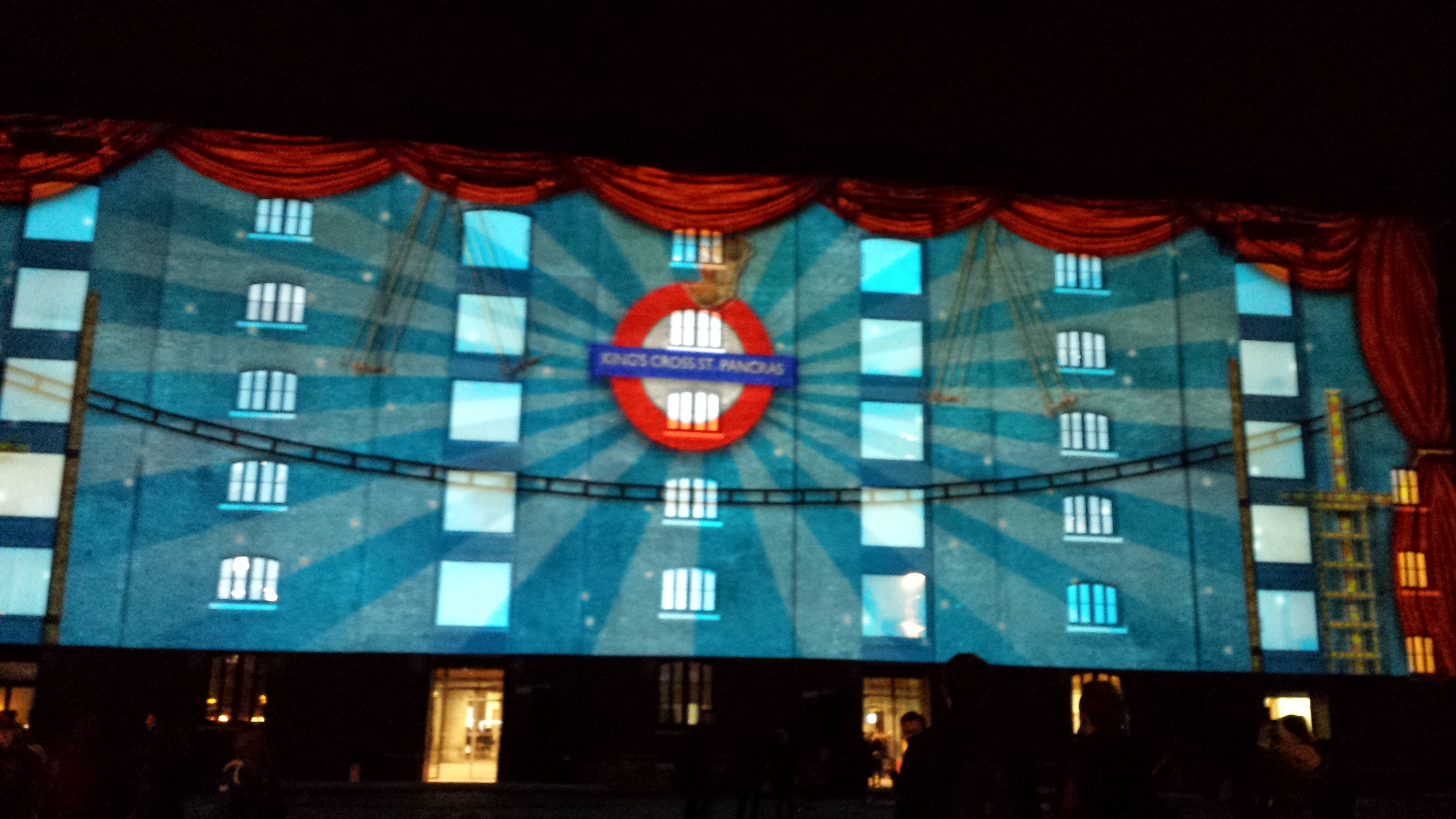
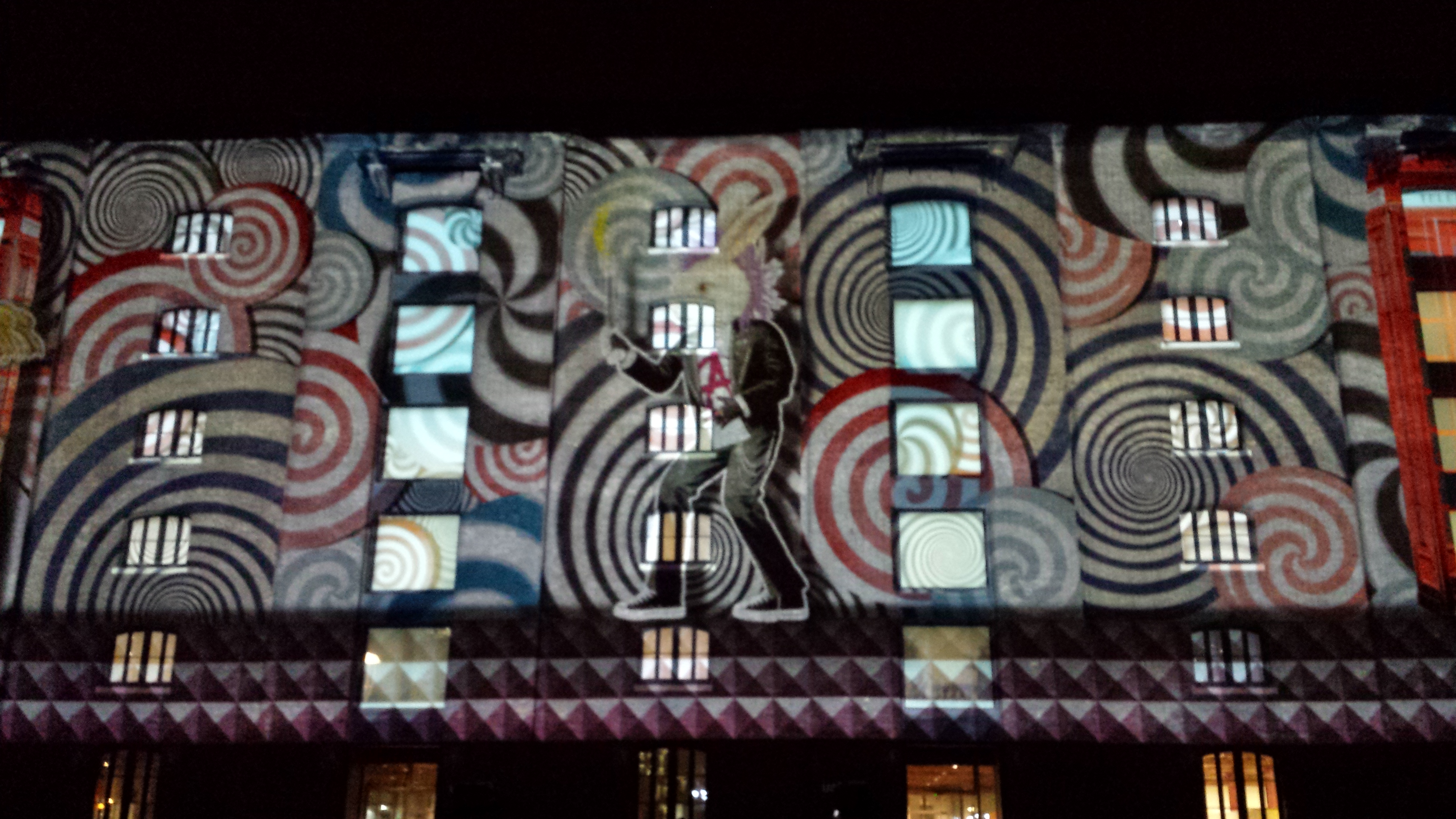
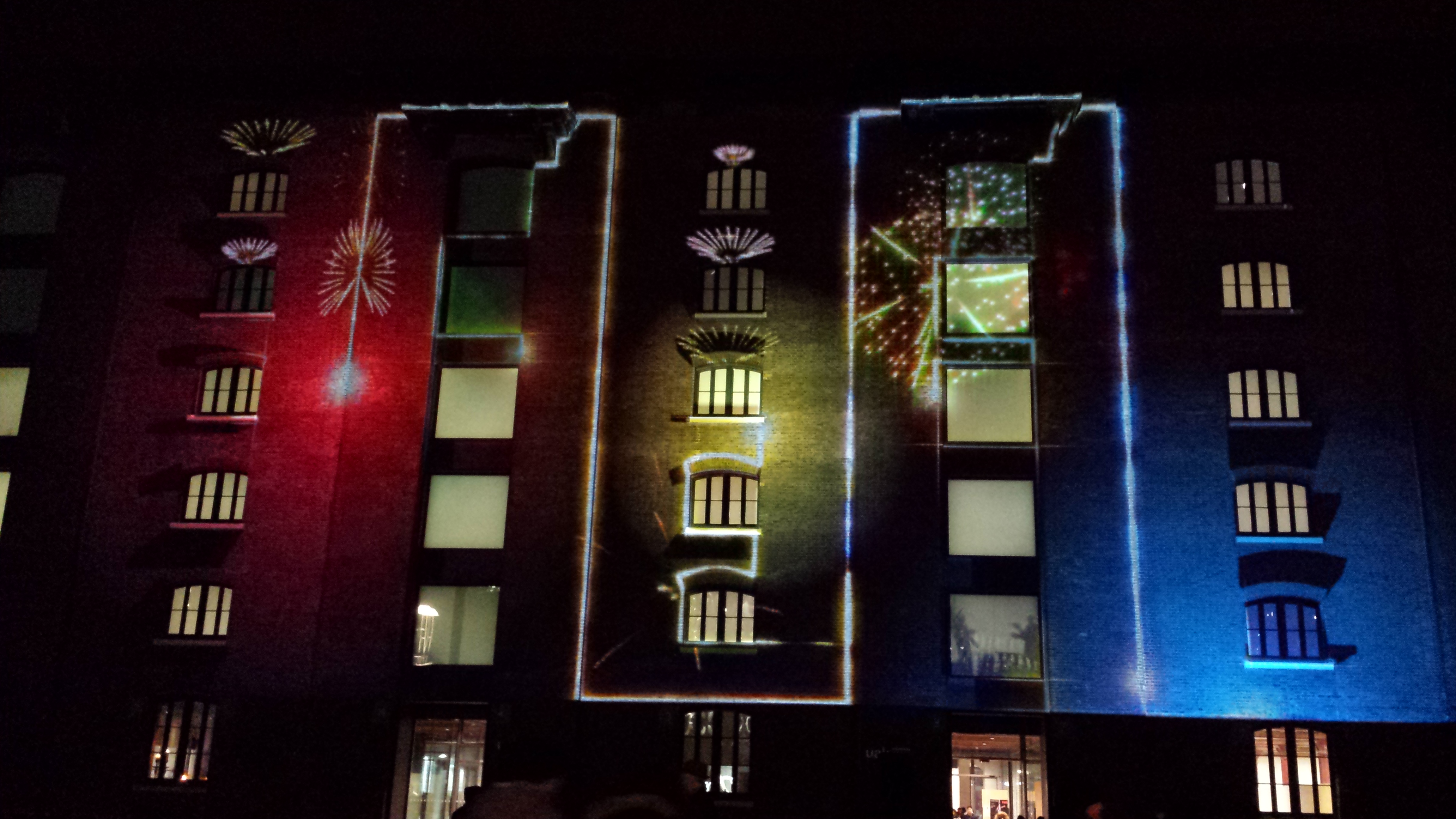
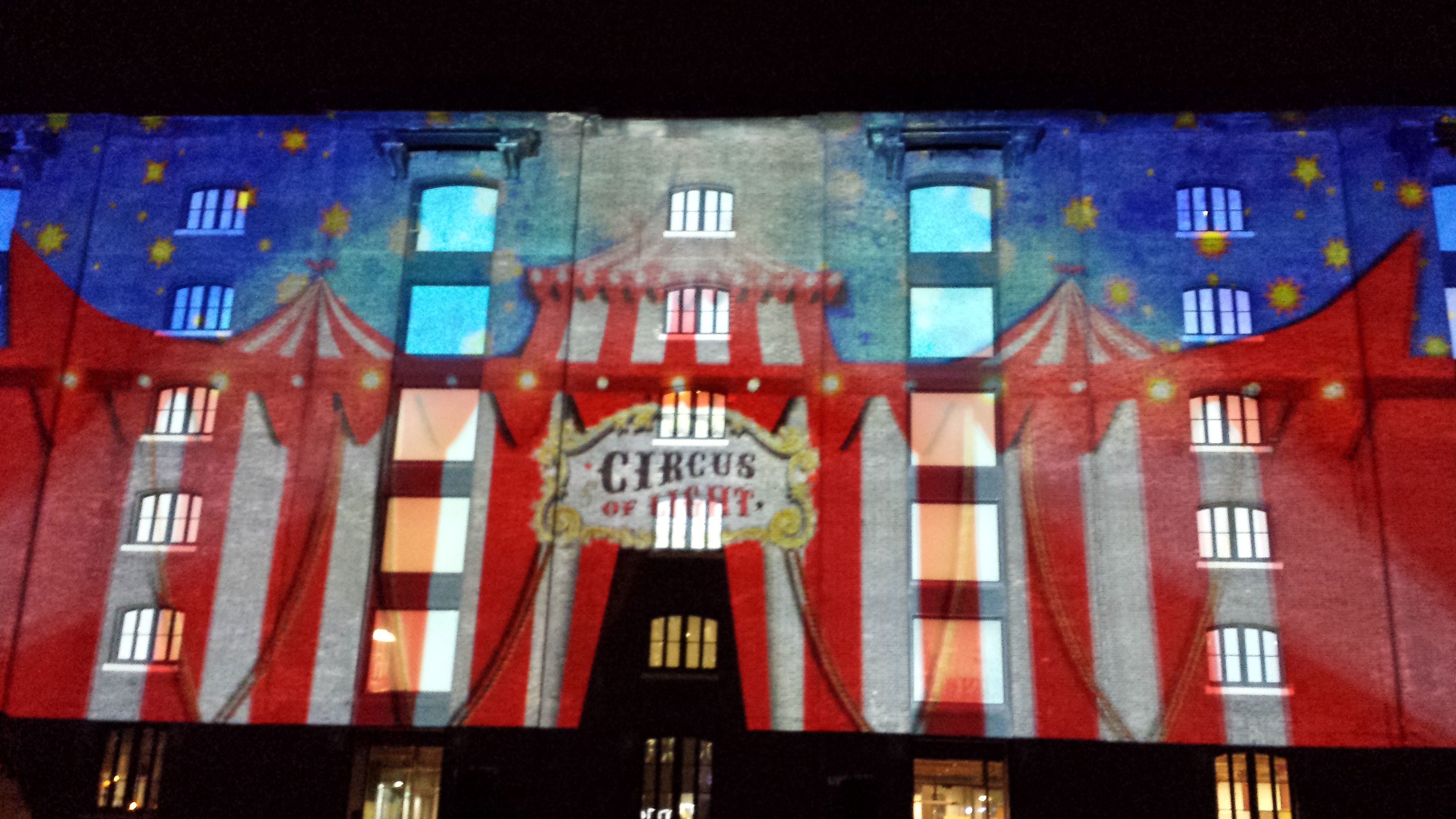
At Kings Cross people were led up from the station to Granary Square via various installations, including one where people could make their graffiti on the pavement with light wands. At Granary Square there was a giant Circus of Light, complete with sound effects, projected onto the main Granary Square building. Inside there was also a beautiful installation made from solar powered plastic bottles, with an explanation about how this brilliant piece of simple technology was providing light in areas of the world that did not have access to electricity – art with a social conscience.

In various areas there were volunteers handing out maps with enthusiasm and who reminded me of the Gamesmakers at the 2012 Olympic Games. It was all rather haphazard though – one volunteer stamped my map and explained that there were stamps at each installation and a prize if you collected all the stamps, yet at the next few installations I couldn’t find the volunteer with the stamp. One volunteer said that he knew nothing about the stamps and loads of people had been asking him about them. Other volunteers had no idea where some of the exhibits were and were rather at a loss when being asked for directions. It seemed like they could have done with a better pre-event briefing.

The festival was refreshingly uncommercial; it was free to attend and you could just wander around at will. And yet I couldn’t help thinking that a little bit of commercialism would have been welcome, as it was absolutely freezing when I attended, and I would have liked to have stood in Granary Square watching the Circus of Light for a lot longer than I did but had to give up as I was so cold. If there had been some stalls selling hot chocolate, or coffee, or even mulled wine, I might have been able to brave the cold for a little longer!

lumiere28  20160114_212915.jpg 20160114_212543.jpg

lumiere22 20160114_213012.jpg

20160114_213043.jpg lumiere27

20160114_214943.jpg 20160114_214939.jpg

20160114_214616.jpg 20160114_214631.jpg 20160114_214718.jpg 20160114_214748.jpg lumiere24 lumiere23 20160114_215714.jpg 20160114_215710.jpg 20160114_220535.jpg

20160114_213549.jpg 20160114_213759.jpg 20160114_214109.jpg 20160114_214112.jpg 20160114_214151.jpg 20160114_214238.jpg 20160114_214331.jpg 20160114_214350.jpg 20160114_214354.jpg 20160114_214411.jpg lumiere26 lumiere25

Overall, despite the various problems – the overcrowding, the cold and the distance between installations, I thought it was a brave and ambitious project – and quite a brilliant one. I loved it, and hoped that it would become an annual event, so was disappointed to read in the paper that it would not be returning next year. I think this is a shame, but quite understand why – it is an enormous feat of organisation to do this on such a large scale. But I felt privileged to have seen it and will always remember the time that London lit up the night skies and banished the January blues.

Posted in Art, Events | Tagged , , , , | 1 Comment

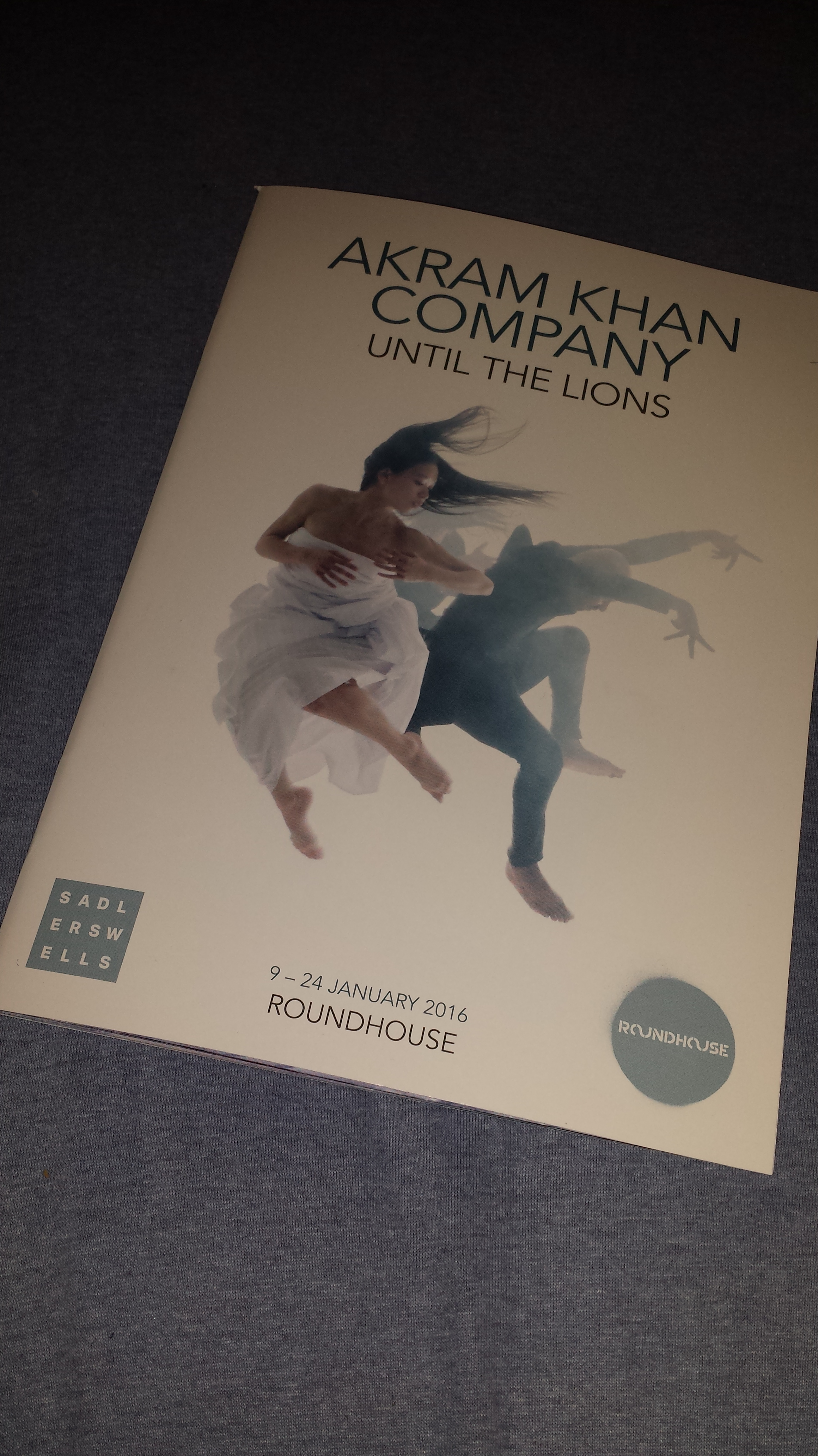
Akram Khan Company – Until The Lions

akram khan

I have long been a fan of Akram Khan, and his production DESH is one of the best performances of any dance company that I have ever seen. So I was thrilled to see that he had a new production out receiving its World Premiere in London. I eagerly bought tickets, and my anticipation was heightened by the reviews that I read after the opening night which raved about it, using words like “powerful”, “poignant” and “moving”.

The work is a partial adaptation of Until the Lions: Echoes from the Mahabharata, a retelling in verse of the epic ancient Hindu tale, the Mahabharata. I was at a disadvantage compared with one of my companions for the evening, who was familiar with the Mahabharata from childhood. Before the show started he tried to explain the story of Amber, Bheeshma and Shikhandi and I tried to read up about it in the programme notes. I generally don’t worry about following the story of a contemporary dance performance, or try to find meaning in the piece, and am happy just to watch and enjoy the dance itself in abstract, but as I was aware that this was based on the Mahabharata I felt that it would help to understand a little of the back story.

The London run is based at the Roundhouse in Camden, a performance space that proved to be absolutely perfect for this production; so it came as no surprise to read in the programme that Until the Lions was especially created for the Roundhouse’s iconic Main Space. The only disadvantage of the Roundhouse is that the roof is supported by many pillars which block the view of many of the seats in the house. I was trying to buy 4 seats in a row but it was impossible to get 4 seats without at least one of them being shown as “partial view” due to the pillars, so had to buy them in a block of 4 across 2 rows. I wondered if this was the reason that there were quite a few empty seats – I had expected a new production by Akram Khan to be completely sold out but this was not the case.

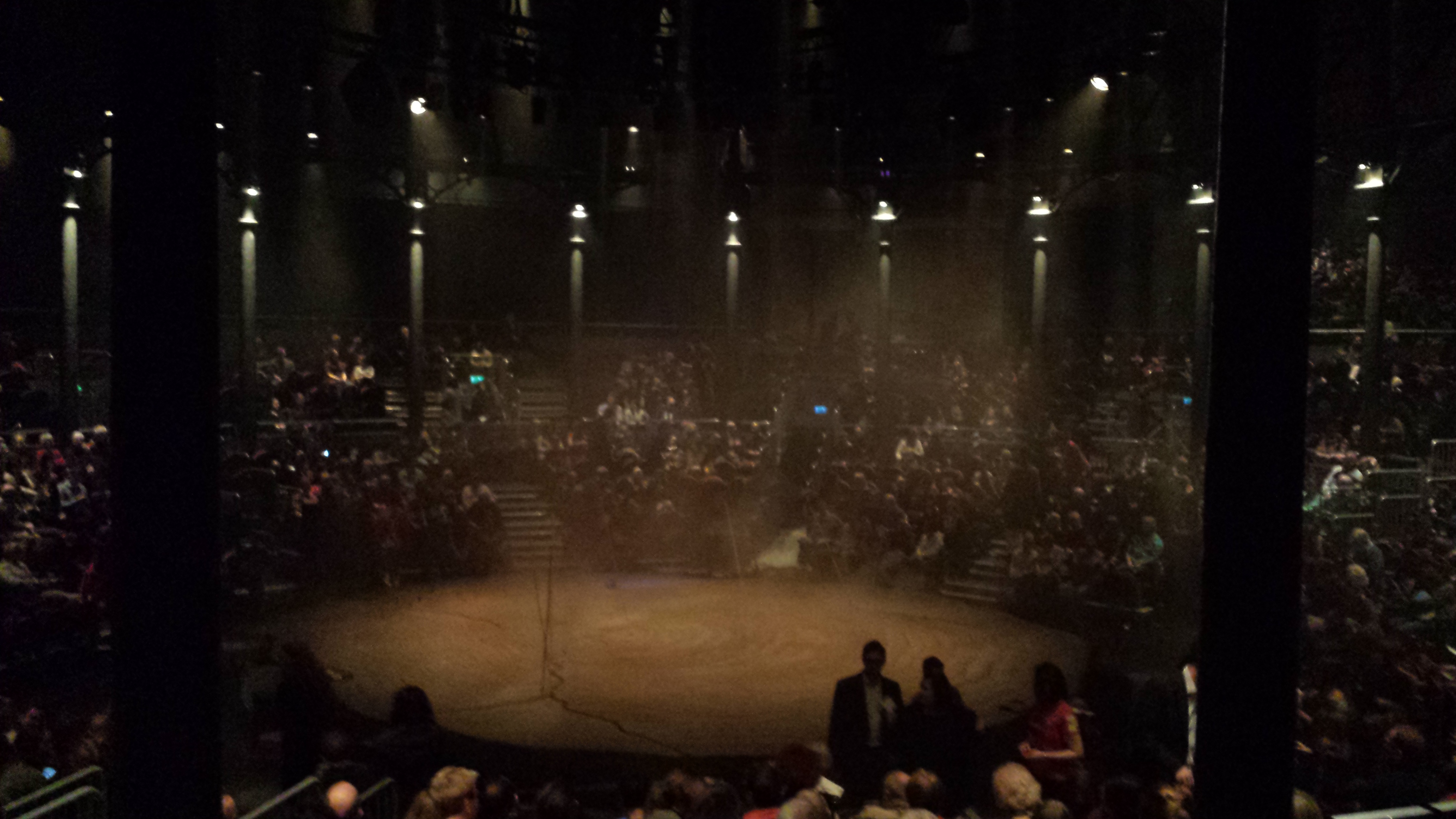
Taking our seats in the Roundhouse I felt an enormous sense of anticipation and excitement. The stage area was made up of a giant slice of wood with cracks across it and smoke or steam pouring up from out of the cracks as though the earth underneath was on fire. Dramatic lighting also added to the effect, making the stage look like a giant gladiator arena.

With no curtain and the performance being in the round, a gradual hushing of the audience indicated that the performance was about to start, and I suddenly realised that one of the dancers was on the stage. Throughout the performance, the dancers and musicians used both the “stage” area and the area around it, breaking up the natural barrier of a more conventional theatre space where the action all takes place on the stage and is separated from the audience and making it feel more intimate which was surprising for such a large space.

20160114_193249.jpg

And so to the performance itself. Despite the large space and dramatic setting leading me to think this would be a large-scale production with many performers, there are just two other dancers other than Akram Khan himself; Ching-Ying Chien and Christine Joy Ritter. The dancers are outnumbered by the musicians: Sohini Alam, David Azurza, Yaron Engler, and Vincenzo Lamagna. The four live musicians (there were others on a soundtrack) mostly used the area around the stage, and sang, played the guitar and drums and often used the stage itself as a giant drum. The music was extremely effective; sometimes consisting of haunting melodies sung by the musicians, at other times all four musicians banging out a rhythm with sticks on the stage that increased in volume and tempo to heighten the atmosphere and add to a sense of drama. At one point I thought one of the two women was singing a beautiful, haunting melody, but then realised it was one of the men who was a counter-tenor with a gorgeous voice.

The dancers were amazing; Ching-Ying Chien who played Amber was particularly striking – it seemed as if her muscles and tendons had been replaced by elastic bands, with some poses she struck like a contortionist, or like a doll whose limbs had been twisted at the joints so her legs were facing the wrong way. Akram Khan seemed to take a lesser role than the two female dancers, which for me was disappointing although understandable as he is now 41 years old. But although the dancing was incredible; dramatic, primitive, aggressive and animalistic, I didn’t find it particularly moving or beautiful. At times the dancers writhed around on stage, or performed very jerky movements almost as though they were having an epileptic fit. There was one move which was repeated throughout; with the dancer holding his/her hand up in a claw-like gesture in front of either their own face or another’s face. I’m sure this was supposed to be symbolic but it was a bit lost on me.

The dancers also used sticks as a prop – sometimes banging them on the stage, at another time a stick with a head on the top was paraded around, sometimes the sticks were stuck into the cracks in the stage and at other times they were used as weapons. The piece built up to a climax in which the cracks in the stage grew bigger, the stage moved upwards with dramatic lighting so that it looked as if there had been an earthquake with the earth heaving and moving and smoke pouring through the cracks, and the earth below a molten red in colour as if on fire.

As dramatic and impressive as this was, I had the feeling that if you took away the lighting and special effects, you wouldn’t be left with very much, and I had a bit of an “Emperor’s New Clothes” feeling. I was left feeling slightly disappointed; I wanted less posturing and more dancing. And with the whole show lasting only just over an hour, it also seemed rather expensive at £30 a ticket, only to be left wanting something of more substance.

Judging from the reviews – the critics have loved it – I may be the only person who felt this way! It is certainly a very clever and thought-provoking piece; it just didn’t float my boat. But do go and see it and judge for yourself – although the production has now finished at the Roundhouse, it is on at the Brighton Festival in May, and I’m sure will be repeated again at some time in the future.

20160115_174947.jpg

Posted in Dance, Reviews | Tagged , , , | Leave a comment

Classic Cornish Pottery – It’s All About the Blue and White

Evokes memories of the British seaside, cream teas and sandy beaches!

Source: Classic Cornish Pottery – It’s All About the Blue and White

Posted in Uncategorized | Leave a comment

Lundy Letterboxing – hobby or obsession?

I’ve just come back from my fourth visit to Lundy, and my second time of being on the island to see the New Year in. There is something very special about this magical island that casts a spell over many a visitor, that sees them returning year on year and I am no exception to this spell. Having got home, I thought I’d look up this blog post that I wrote as a guest blogger for Into The Orchard after my first visit to the island, and give it a cheeky repost here.

lundy letterboxing

Recently I was fortunate to go to Lundy Island with a group of friends to celebrate my birthday.  Lundy is a three mile lump of granite rock in the middle of the Bristol Channel, owned by the National Trust and leased to the Landmark Trust, and with a number of holiday cottages / properties on it.  Before going, I read up about the island so knew a little of what to expect; I knew that it was a place where time seems to stand still; with no real roads or cars, no television / radio in the holiday lets, and where the electricity comes from the island’s generators rather than the national grid and runs out each night about midnight!  I knew that there was a shop, a church and a pub, whose door never shuts and where mobile phones and other electronic devices are banned – you get fined £1 for using them – although I couldn’t get a mobile phone signal on the island anyway!  I also knew about the wildlife; that it is the only marine conservation zone in the UK, that it has puffins (the island’s name means Puffin Island in Norse), seals, basking sharks and is the only place in the world where the rare and unique Lundy Cabbage grows.

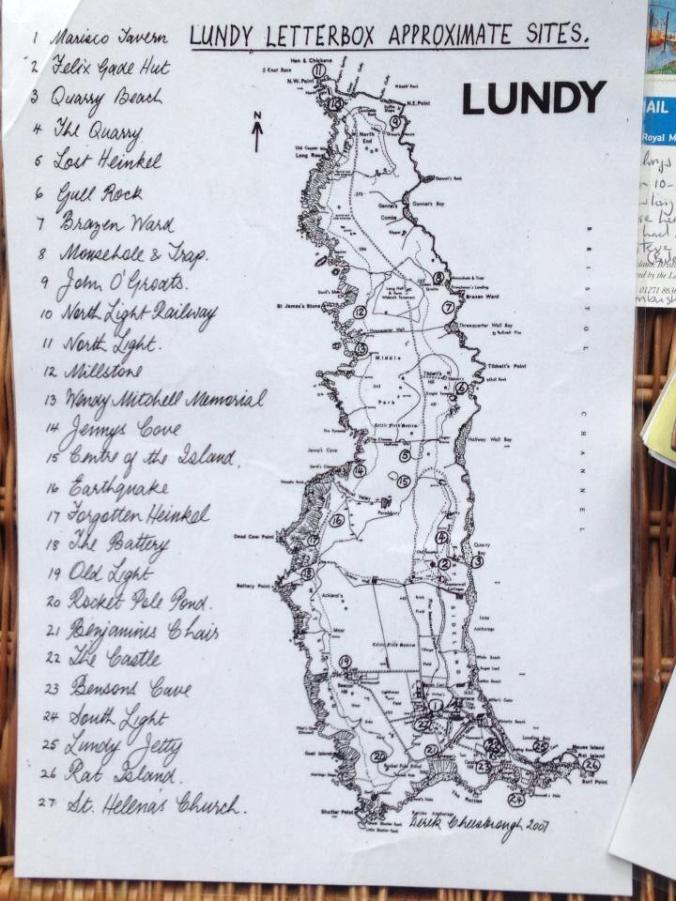
What I didn’t know about was the well-kept secret of Lundy Letterboxing.  The island has one of the world’s oldest private postal services, and produces its own stamps which have to be placed on the top left-hand side of the letter due to the island’s quirky franking system.  There is one letterbox in the wall behind the pub where I soon posted my postcards home.  However there are also 27 other letterboxes craftily hidden around the island, leading to a unique Lundy pastime that quickly becomes an obsession – called Letterboxing.  This is like a cross between Geocaching and Orienteering; an ingenious treasure hunt for children and adults alike.

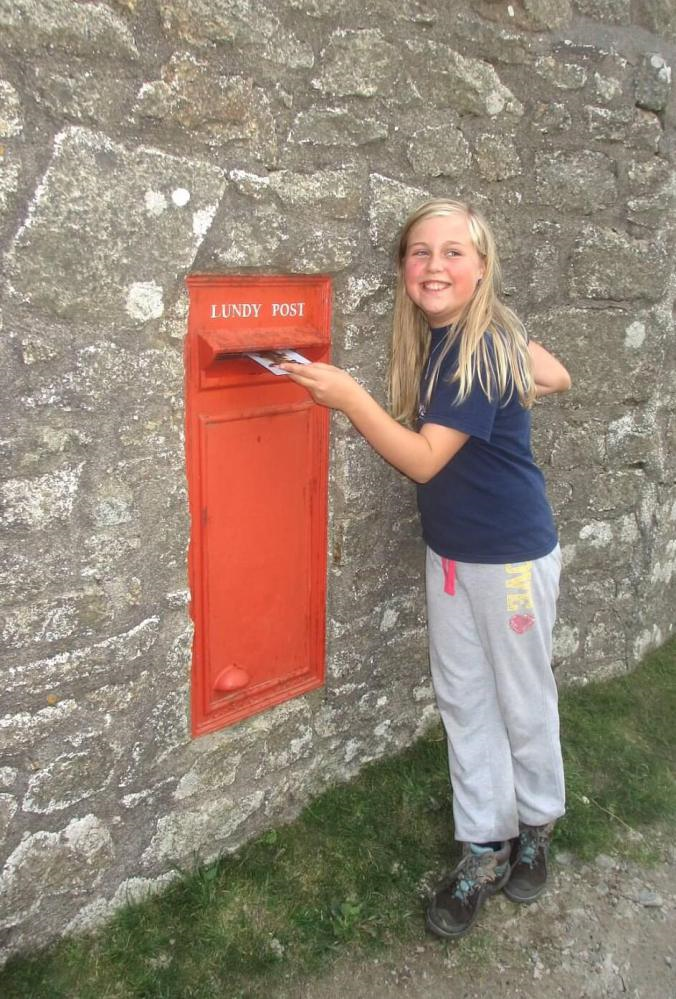
The Lundy letterboxes come in various designs; some are wooden boxes, other weatherproof tupperware boxes, wrapped in two Lundy island carrier bags and hidden in some very crafty places around the island; under rocks, tucked into a crevice, in a cliff, in a cave or a stone wall.  Each letterbox contains an ink pad, a stamp that is unique to the letterbox’s hiding place and a little notepad.  Some of the letterboxes contain stamped-addressed postcards left behind by previous letterboxers – if you find a postcard in the letterbox you remove it and post it back to the owners and you can also leave a postcard somewhere for the next letterboxer to find and post back to you. Also one box contains the shy but athletic Lundy Bunny that hops around the island from letterbox to letterbox.  If you find the Lundy Bunny you are allowed to move it to another letterbox, hence the athleticism!

lundy letterbox

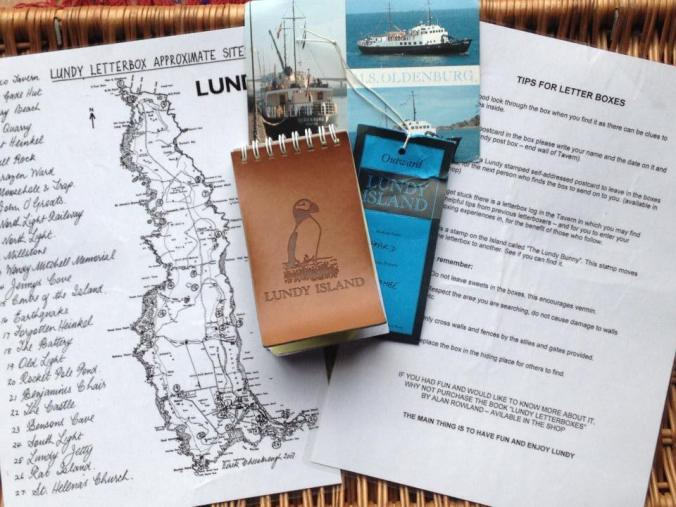
To get started you buy a pack from the shop which contains some laminated clues, your own little notebook (to stamp up with proof that you have found each letterbox) and a stamped postcard.  You can also hire a compass for a returnable deposit, and your own design of stamp to use in the notepad in any letterbox you find.  Then you eagerly set off with the spirit of adventure to find your first one.

  lundy letterbox map     lundy letterbox katy

Almost everyone starts with the easiest one – it’s in the pub!  There is a danger that once this is found, the delights of the wonderful Marisco Tavern ensnare you with its books, board games, delicious food and beer so that you decide to give up and not bother going on the hunt for letterboxes.  However for those who persevere, the delights of letterboxing very quickly become apparent and the hunt for the elusive letterboxes takes you to places on the island you would probably miss if you were just going for a walk.  As we found each one we took a photograph of the finder triumphantly holding up the letterbox, and thus we all need to explain to anyone looking at our holiday photographs of why we have endless photos of us beaming whilst holding up what looks like a manky carrier bag!
lundy letterbox 1     lundy letterbox 2

Each of the letterboxes has a name and the letterbox stamp reflects the name and character of the place in which it is hidden.  Two of the letterboxes were named The Lost Heinkel and The Forgotten Heinkel.  We had no idea what a Heinkel was and spent ages looking unsuccessfully for The Lost Heinkel on day one; ignoring a heap of metal that we thought was the remains of a burnt out tractor.  Only when we found The Forgotten Heinkel did we learn that a Heinkel is a German aircraft company and the heap of metal was the remains of a Heinkel aircraft that crashed on the island in World War II.  We had clearly been in the right area but just failed to find the letterbox despite much searching.

Some of the clues are quite esoteric.  We spent ages searching around under a beak shaped rock without success, only to discover it was the wrong beak shaped rock.  When we found the correct beak shaped rock it was clearly far beakier than our previous rock leading to much kicking ourselves for our short sightedness.  One of the clues suggested we found a rock that looked like a piece of cheese – we read this clue whilst standing on top of hundreds of rocks that all looked like cheese given a bit of imagination!

lundy letterbox beak

We managed to find 7 letterboxes on day one and retired to the pub for a well-earned pint.  In the pub is a letterbox log book; a journal in which letterboxers can leave clues or helpful tips and hints, or write about their experience of letterboxing, have a moan about their frustrations of trying to find some of the harder letterboxes or boast about how quickly they have managed to find them.  One contributor to the log book suggested that the best approach was to adopt a Zen-like position; to let the letterboxes come to you rather than the other way round.  We tried this on day two with varying degrees of success!  Reading the log book also gives an insight into how much of an obsession letterboxing can become.  Some people split into teams and see who can find the most in the fastest time. Then there are those who think that they should add additional letterboxes, quickly followed by complaints and entries to explain that the illegal letterboxes have been removed!  Lots of people write complaining that it is too hard, especially for children and there are lots of entries from children themselves stating how much fun they had trying to find them and how easy they were to find!

So if you find all 27 letterboxes do you get a prize, cash, freedom of the island, discount on your next holiday, a free pint, or a combination of all these?  No, you get a certificate and your name goes in a book of achievement in the pub.  This seemed really quaint and old fashioned at first and hardly worth all the effort but very soon the magic of Lundy caught on and suddenly that certificate became much sought-after and desired.  There is an incredible sense of achievement you get from finding each one and so to find all 27 must feel like a mammoth achievement that brings with it its own sense of satisfaction. Some people take years to find them all coming back time and time again and searching for the hardest to find.  Many children take part; their parents commenting in the log book about how it was a great way of keeping children interested in exploring the island and yet some of the letterboxes were incredibly inaccessible and quite dangerous, requiring the letterboxer to scramble across rocks and climb cliffs.  The island is the land that health and safety forgot with a deliberate philosophy of not putting ropes or signs up to warn people of danger which actually makes people take more care.  So I did muse on how many children had been sent off letterboxing by unwary parents to death traps, but the log book didn’t seem to record many letterbox-related injuries / broken legs other than the odd complaint about grazes and bleeding fingers!

After 3 days of intermittent letterboxing, we found 14 – and were pretty pleased with that haul.  We found one self-addressed postcard which we duly posted and we left our own self-addressed postcard for the next people to find and post back.  It arrived only a few days after being left; despite leaving it in what we thought was one of the more difficult boxes to find.  We didn’t find the Lundy Bunny though, to the disappointment of the ten year old in our group.  We never did find The Lost Heinkel either despite going back and trying a Zen approach on day two and it remained lost to us.  I can’t say I’m too disappointed; having caught the Lundy letterbox bug it gives me a huge excuse to go back to this wonderful island year on year just to find the remaining letterboxes!

Lundy island

On returning from Lundy, I found this blog where they have found all the letterboxes and claimed their certificate and have taken photos of all the stamps.

Lundy Old Light

This post was written in 2013 after my first trip to Lundy. I seem to have got worse at letterboxing – this New Year I didn’t manage to find a single letterbox. But I’m putting that down to bad weather that kept me from going out letterboxing and not, no definitely not, that if I find them all it will remove an excuse for me to keep visiting the island!

Posted in Landmark Trust, Lundy | Tagged , , , | 1 Comment

Masterchef – the year of the blob!

masterchef

I have been watching Masterchef for many years, through its various incarnations, and was staggered to find out that it has been on television in the UK since 1990. The basic idea of the programme in which people cook increasingly complex dishes in order to compete for the overall accolade of being the overall winner, has become incredibly popular and has led to various different formats including “professional”, “celebrity” and “junior” versions.

As I write this, we are nearly at the end of the latest ‘professional’ version, with the final being held tomorrow. I am not going to comment on the current three finalists, who all seem to be staggeringly good chefs, or who I think should win (I probably couldn’t put a parmesan shaving between them to be honest), but have been musing to myself about the popularity of the programme and how it has changed since its Loyd Grossman days.

My memory may fail me, but I seem to recall that back in the LG days, the contestants seemed far more amateur than they are now, and the dishes they produced far simpler. The programme was on once a week, whereas now with this current series it is on for an hour three nights a week, which requires a considerable viewing commitment. Perhaps it is for this reason that I have been less engaged with this series – there is just so much of it! It really seems to be spun out with endless invention tests, chefs visiting other chefs’ restaurants to cook the lunchtime menu, and so on.

Aside from the many hours required to watch the entire series, this series seems a bit stuck in a rut as the format has become almost clichéd. After every test there is the ubiquitous shot of the chef slumped exhausted onto a sofa, sighing loudly and wondering if they’ve “done enough” or “let themselves down”. And every contestant who doesn’t make it through and has to leave the kitchen is always “gutted”. Never disheartened, upset, realistic, disconsolate or even plain sad – the first thing EVERY single evicted chef says is that they are “gutted”. And not once has anyone added “no pun intended” after saying this on a cooking show! Aside from the g word, the language becomes increasingly sycophantic and overblown as the series progresses, with dishes being declared “astonishing” and “works of genius”.

As well as the clichéd language, other elements of the format remain the same year in year out. The raised eyebrow and withering looks of the deadly duo of Monica Galetti and Marcus Wareing when they realise the professional chefs can’t make a brandy snap, fillet a fish or even make a burger. Gregg Wallace’s pudding face and his excited jumping up and down like a little boy in a sweetshop (so greedy, he even has an extra ‘g’ in his name). And the long, long, ever-so-drawn-out pause before the winners/losers of each episode is announced. And the fact that the Professional series, unlike the other series, is so very male-dominated.

As the series progresses, the food gets every more complex and fancy. Now I can’t afford to go to a 1, 2 or 3 Michelin-starred restaurant, so find it fascinating to see what food is in fashion in a fancy-dan restaurant, and interesting to note how much this does change from year to year. Some of these changes can only be for the better in my book, such as how they seem to have reverted to calling a sauce a sauce, rather than the “jus” of previous years. There also seem to be far fewer “foams” and “airs” this year; instead we have ingredients that are dehydrated and then crumbled over the top of the dish. Presentation has changed as well; last year almost every dish seemed to start with a smear of some sauce being painted across the centre of the plate with a paintbrush. This year the smear is more like a puddle that is smeared away with the back of a spoon. But the overriding feature this year is that it is the year of the blob. Every plate MUST feature several blobs, of differing sizes, put on the plate via a squeezie container that looks like the sort of thing you find ketchup in at a greasy spoon, or paint at a toddler’s nursery. Some dishes have a few artfully placed blobs, others are blobtastic with blobs of all sizes and colours being squeezed onto the plate.

Once the blobs have been put on the plate, the remaining ingredients are “plated” (who knew that plate could be turned into a verb?) by placing them individually – sometimes using tweezers – so that they look as though they’ve fallen onto the plate in a random muddle, all jumbled up. And often featuring edible flowers which are also clearly in fashion.

One of the trends of previous years that seems to have stuck is the ever present “sous vide” technique – or boil in a bag as I like to call it. But a new trend seems to be the desire to burn everything this year – or to present it as “charred”. A few episodes ago, the chefs were going into raptures about a dish whose key feature was that it was hidden under a “blanket” of a lettuce leaf which was then “charred” using a blow torch. Good grief.

Tonight’s episode saw the three finalists cooking a taster menu in a very poncey restaurant in Italy. There was a certain element of the Emperor’s New Clothes about it which set twitter alight, so much so that #masterchefprofessionals was trending hours after the episode had aired. At one point the Italian chef made a salad that was called something like “Salad No 41” and appeared to consist of some salad leaves stuck into a bit of oasis with the ever present edible flowers, and looked like a floral centrepiece, which the contestants then tucked into using tweezers rather than a knife and fork!

But I guess its this pretentiousness that actually makes the programme so popular – we just love to both admire and ridicule at the same time. Although it does make me want to go completely the other way and I find that when deciding what to cook for my evening meal to have in front of the television watching Masterchef, I only want to eat something like beans on toast in contrast!

Whatever the attraction, with over 3 million people watching it each day that it is broadcast, they must be doing something right, even though I can’t help feeling it needs a few new ingredients for the next series. I wish the remaining three finalists all the best, and hope that the losing two chefs aren’t too gutted.

Posted in Uncategorized | Tagged , , | 1 Comment

Lest We Forget

Last night I was fortunate enough to catch the last performance at Sadlers’ Wells of Lest We Forget, an evening of dance to commemorate the First World War and danced beautifully by English National Ballet (@enballet). Over the last year there have been many performances, books and special commissions to mark the centenary of the First World War, ranging from concert performances, recordings of music inspired by the Great War, anthologies of the First World War poets, through to the fantastic sea of poppies cascading from the walls of the Tower of London and now at the Yorkshire Sculpture Gallery. I have been to several of these concerts, and performed in some myself, but this is the first time that I have seen the centenary marked through the medium of dance. When I mentioned to a friend that I was going to see this performance, he laughed out loud and mimed a comic interpretive dance with soldiers in the trenches dodging bullets and falling down dead. So I went with some trepidation, hoping that something so horrific and heart-wrenching would not be made ridiculous by translating it into dance. I needn’t have worried; the evening was thought-provoking and I found it impossible to describe without using adjectives such as haunting, beautiful, reflective and poignant.

Lest We Forget is made up of three pieces by different choreographers, with each piece building on the others and combining so that the whole evening was greater than the sum of its parts. All three were beautifully lit by Paul Keogan, Michael Hulls and Fabiana Piccioli in turn – I mention all three as so often the people who light a performance are the unsung heroes. They don’t take a curtain call, and their names are not feted in the same way as the choreographer, and yet the lighting can make or break a dance. At times the dancers were lit so that they appeared as ghosts, at other times the lighting was stark and unforgiving emphasising the harsh reality of war. Sometimes you barely noticed the lighting and at others it took an integral role such as to mark the walkways and paths the dancers took or to mimic searchlights.

The evening started with No Man’s Land by Liam Scarlett, a piece that was more classical in form than the other two more contemporary pieces. This was an excellent piece to set the scene and the tone for the programme. The staging was particularly effective with a grimy munitions factory with broken windows, and long walkways and steps along which the soldiers had to trudge whilst the women working in the factory released clouds of dust that were a premonition of the final piece in the programme. The costumes were equally effective at setting the scene, with khaki/brown uniforms and tin hats for the soldiers and dreary, grey, utilitarian dresses for the women at the start then brilliant blue dresses to celebrate the homecoming from war of their soldier beaus. And home they all came to joyous reunions, all except for one dead soldier, whose ghost was left to dance the final duet with the woman he left behind. The majority of the work was set to Liszt’s piano music which was orchestrated by Gavin Sutherland and played live. However, the final duet was danced to the very musical solo piano playing of Julia Richter. And as the orchestra fell silent and the music was pared down to the solo piano it made the final duet seem more intimate and moving, as the ghost quietly danced with his heart-broken sweetheart.

There were times when some of the female dancers sat on the steps on the stage appearing to be detached and uninvolved in the dance, and I felt slightly the same – detached and uninvolved. Although it was all beautifully performed, it was too classical for me, and the ballerinas twirling on their pointes left me a little cold. I could admire it but it didn’t move me in the same way it moved others in the audience.

The more contemporary Second Breath by Russell Maliphant was far more my cup of tea, with contemporary dance set to an exciting electronic rhythmic soundtrack that pulsated with life. The title was apt, as it was breathtaking and dazzling with virtuosic dancing that found me holding my own breath at times. The soundtrack included a recording taking from the Imperial War Museum Archive of a reading of Do Not Go Gentle Into That Good Night by Dylan Thomas, that was hauntingly poignant.

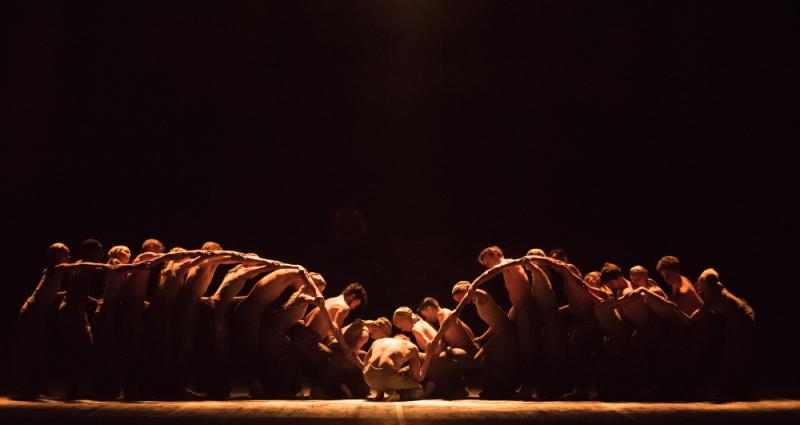
The showstopper and real star of the night though was Akram Khan’s award-winning Dust which closed the programme. The title echoed the “ashes to ashes, dust to dust” litany said at funerals, and at the start a row of solemn, dimly-lit, ghostly figures clapped their hands to release clouds of dust as thought their bodies were disintegrating into dust before our eyes. A writhing, pain-wracked bare-chested dancer was the visceral embodiment of a dying man, at times held up and then struck down by a multi-armed monster. This central character spent some time sitting on top of a trench wall that other soldiers had fallen over, perhaps having already died. The women left behind in this piece were strong and powerful rather than the downtrodden exhausted women in the first piece.

The whole effect was enhanced by the wonderful score by Jocelyn Pook, which mixed live music from the orchestra with an electronic soundtrack featuring foreboding drum beats, the haunting and very beautiful singing of counter tenor Jonathan Peter Kenny and voices from beyond the grave with a recording made in 1916 of With Our Boys At The Front narrated by Sergeant E. Dwyer, V.C., 1st Bn. The East Surrey Regiment. These disparate elements combined perfectly and effectively to increase the atmosphere and I found myself sobbing throughout the work, and especially in the very moving final duet.

Although the run at Sadlers’ Wells has finished, Lest We Forget is on in Milton Keynes in October, and Manchester in November. Go and see it if you possibly can, but be prepared to feel emotional for some long time after the evening has finished.

photo by Arnaud Stephenson

Trailer for Lest We Forget

ENB – Lest We Forget

Posted in Dance | Tagged , , , , | Leave a comment